
Streaming advertising
The other customer
Netflix has cut its advertising-revenue forecast as new capabilities arrive more slowly than planned. Satisfying advertisers takes more than a growing audience.
Inditex’s rising stock of clothes is a test of its ability to respond to customers, rather than a verdict on that ability.
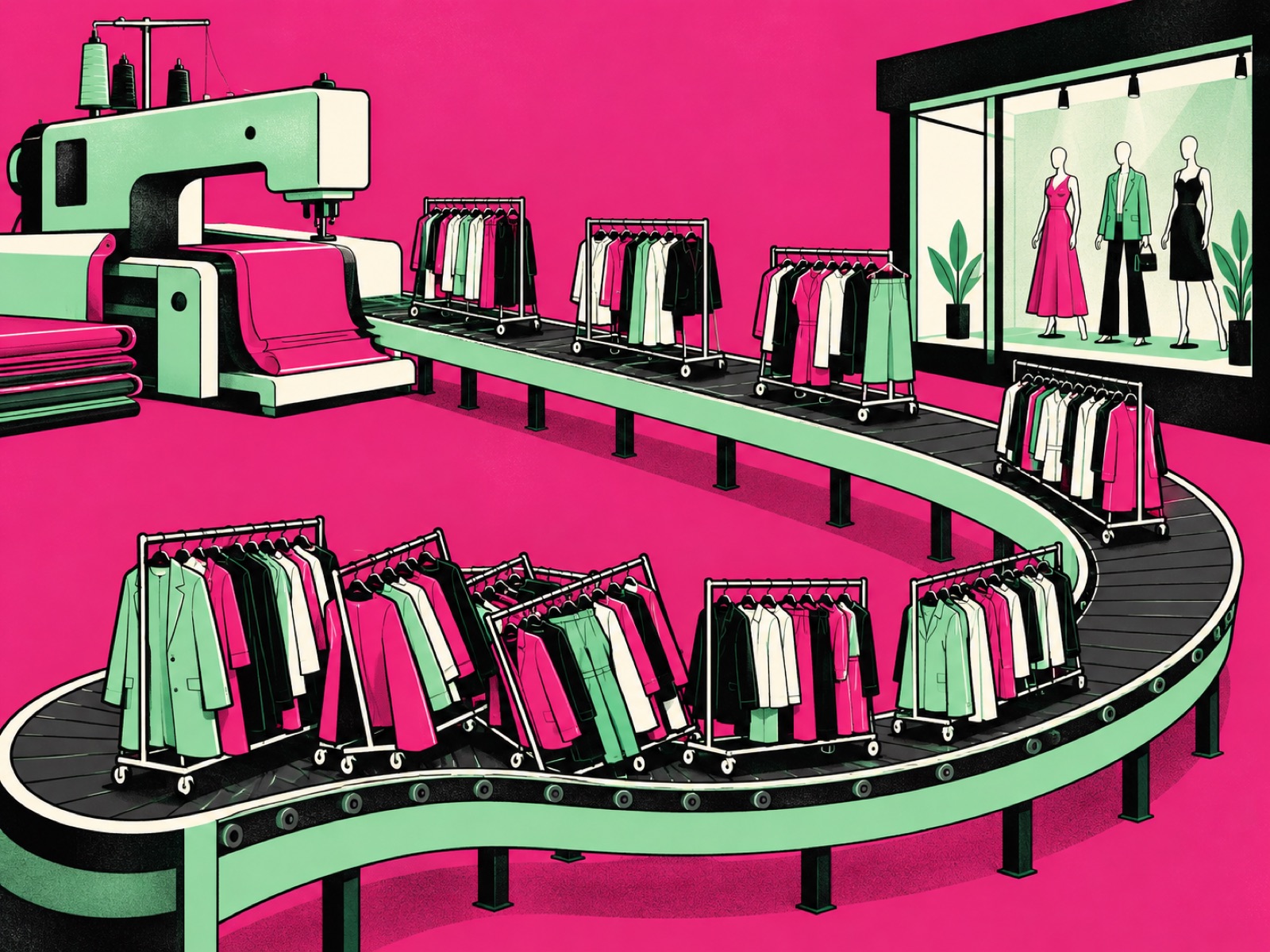
At the end of July, Inditex had €3.789bn of inventory, 9.3% more than a year earlier. Sales in February–July rose a slower 7.6%, to €19.755bn. For a fashion retailer, that gap invites a familiar worry: are clothes arriving faster than customers want them? The figures in its half-year report filed with Spain’s securities regulator do not settle the question. Inventory is a balance on July 31st 2026; sales cover six months. Management describes the stock as high quality, but that is its assessment, not an independently demonstrated result.
Clothes are useful inventory for only as long as someone wants to buy them at a worthwhile price. Too little stock loses sales while a trend is popular. Too much leaves money tied up in products that may need a discount. The difficulty is deciding how much to commit before customers have shown what they want.
Large orders placed early can lower the purchase price per garment. Smaller or later orders can preserve the ability to change course. Paying more for that flexibility may be economical if it avoids a larger loss on unwanted stock. A low buying price is not necessarily a low cost once clearance sales are included.
To exploit that flexibility, information from shops and websites must change decisions about designs, orders and distribution. Knowing that an item is popular in one location helps little if it cannot be replenished there economically. Speed has value when it gets a saleable product to a willing buyer, rather than simply moving more clothes around.
Inditex’s 2025 annual-report letter records more than 400 store interventions, including openings, extensions and full refurbishments, alongside spending on e-commerce and logistics technology. Operating costs rose 2.8% that year, against revenue growth of 3.2%. These are historical results, not proof that every project has earned its cost. They do show why a count of shops misses much of the work being done within the estate.
A larger store can accommodate display, collection and returns in ways a smaller site cannot. Connecting those activities with online sales may improve service, but picking orders and processing returns still consume labour and space. Moving a transaction between channels does not remove its fulfilment cost.
The staffing figures reinforce that point. Inditex’s annual report says 85% of its employees worked in stores in 2025. Better stock information remains dependent on people using it accurately and helping customers complete purchases. Technology and the shop floor are costs that have to work together, rather than alternatives in which one simply replaces the other.
The latest gross margin reached 58.7%, up 0.4 percentage points from the previous first half. That provides some reassurance alongside the rise in inventory. Yet operating expenses grew 8.3%, faster than sales, so better gross economics did not remove the pressure of running the business. The half-year report also reported 9% constant-currency sales growth from August 1st to September 7th. It is an encouraging update for those dates, not a verdict on the whole autumn season.
Gross margin cannot identify the markdown rate on its own. Sourcing costs and product mix can change it too. Equally, the larger inventory balance could reflect preparations for sales, delivery timing or a mistaken view of demand. Neither the income statement nor the balance sheet resolves those possibilities in isolation.
The next test is how the stock converts into sales and margin. Rising sales with a sustained margin would be more reassuring than sales bought through heavier discounts. Conversely, cutting inventory could flatter a balance-sheet comparison while leaving popular products unavailable. Inditex needs enough stock to meet demand without letting the cost of unsold clothes absorb the benefit. July’s balance is the commitment already made; subsequent trading will show how well it was judged.
Netflix has cut its advertising-revenue forecast as new capabilities arrive more slowly than planned. Satisfying advertisers takes more than a growing audience.

IKEA’s new European price cuts renew a difficult bet: accepting less on each sale can strengthen the business only if customers respond.

Costco’s membership income gives it room to compete on price. Keeping that income requires the bargain to remain convincing.