
Commodities
Fool’s gold?
Bullion has fallen by more than a quarter from its January peak, even as central banks buy at the fastest pace in two years
Small investors now account for a third of share trading on busy days. They have done better than the professionals expected
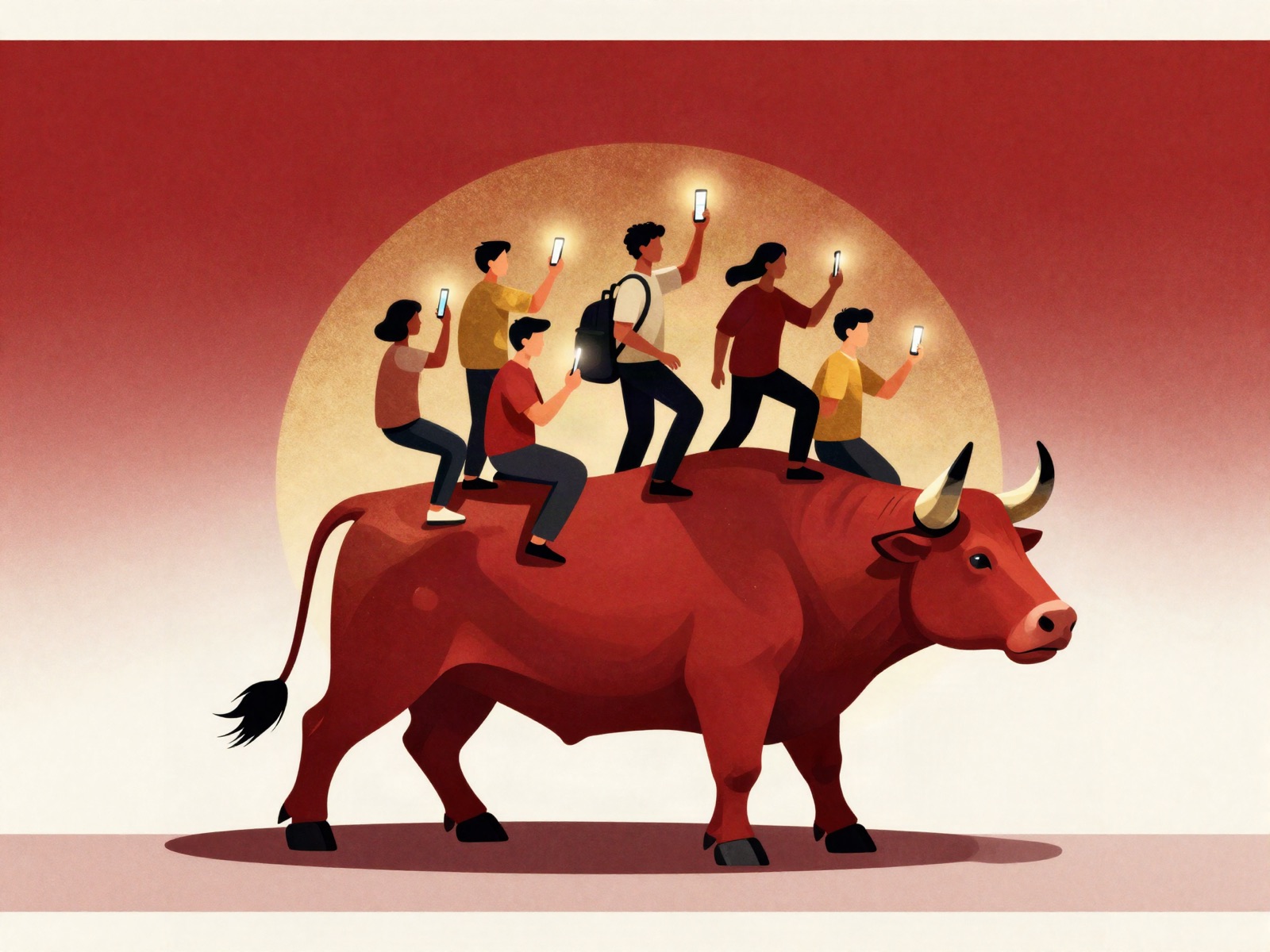
On April 7th 2025, as the S&P 500 sank more than 20% below its February peak in the panic over America’s “Liberation Day” tariffs, professional investors were selling. Individuals were buying. JPMorgan, a bank, estimated that retail investors accounted for a record 35% of American share-trading volume during that bout of volatility. Two days later the White House paused most of the tariffs, and the index jumped by 9.5% in a single session. Within three months it was at a new high.
That episode captures how much the market has changed. Retail investors made up roughly 18% of American equity volume in 2024, according to data from SIFMA, an industry body, and MEMX, an exchange. JPMorgan puts their typical share since then at 20-25%, spiking far higher on busy days.
Sources: SIFMA and MEMX (2024); JPMorgan estimates (2025)
The money behind the trading has grown too. According to Reuters, individuals put a record of roughly $308bn into American stocks in 2025, about 14% more than at the peak of the meme-stock frenzy in 2021. The pace has not slackened. Citadel Securities, a market-maker that handles a large share of retail orders, reported that its retail cash-equity volume in May and June 2026 was 65% higher than a year earlier, and that June 12th was the biggest day of net retail buying it had ever recorded.
The growth is most striking in options. In 2022 exchanges began listing options on the S&P 500 that expire every trading day. These “zero-days-to-expiry” (0DTE) contracts, which can make or lose a lot of money within hours, now dominate the market. In 2025 they averaged 2.3m contracts a day, 59% of all S&P 500 index-option volume, according to Cboe, the exchange operator, and reached a record 62% in August. Cboe estimates that retail traders account for about half of 0DTE volume. Their participation jumped after Robinhood, a popular trading app, offered index options to all its customers in early 2025.
Finance professors have long been rude about amateur traders. A famous study by Brad Barber and Terrance Odean found that the most active individual investors at an American discount broker in the 1990s earned 11.4% a year after costs, against 17.9% for the market. The culprit was not bad stockpicking so much as trading too often. Later work on users of Robinhood found that bursts of herding into the stocks on the app’s top-movers lists tended to be followed by poor returns.
Yet the record of recent years is kinder. Buying the dip has been a winning strategy through every sell-off since 2020: the covid crash, the rate shock of 2022 and the tariff panic of 2025 were all followed by fast recoveries. Some research has also found that retail order flow, taken together, is less foolish than its reputation. Individuals who mostly buy broad funds and hold them have shared fully in a long bull market.
The risk is that the lesson they have learned depends on conditions that may not last. Quick recoveries since 2020 owed much to aggressive help from central banks and governments. In 2026, with inflation above target and the Federal Reserve raising rates, a rescue of that kind would be harder to arrange. A dip that keeps dipping, as in 2000-02 when the S&P 500 fell by about half over two and a half years, would test the habit hard.
Policy is making trading easier still. The SEC has approved extended overnight trading sessions on several exchanges, held a roundtable on 24-hour trading in September and opened a path for trading tokenised shares. Each step brings more individuals into the market at more hours of the day.
That is not obviously bad. Broader ownership spreads the gains from economic growth, and retail buyers have repeatedly provided liquidity when professionals pulled back. But a market in which a third of the trading on stressful days comes from people using leverage-heavy products on their phones is a different animal from the one regulators designed for. Whether it is a more stable one has yet to be tested by a long bear market.
Bullion has fallen by more than a quarter from its January peak, even as central banks buy at the fastest pace in two years

Seven months after Iran closed the Strait of Hormuz, the bill for the biggest energy-supply shock on record is still arriving
An oil shock has pushed America’s central bank into its first rate rise since 2023. Kevin Warsh may not be done