
Streaming advertising
The other customer
Netflix has cut its advertising-revenue forecast as new capabilities arrive more slowly than planned. Satisfying advertisers takes more than a growing audience.
Rolls-Royce’s service contracts reward engines that keep flying. They also leave the manufacturer responsible when maintenance costs disappoint.
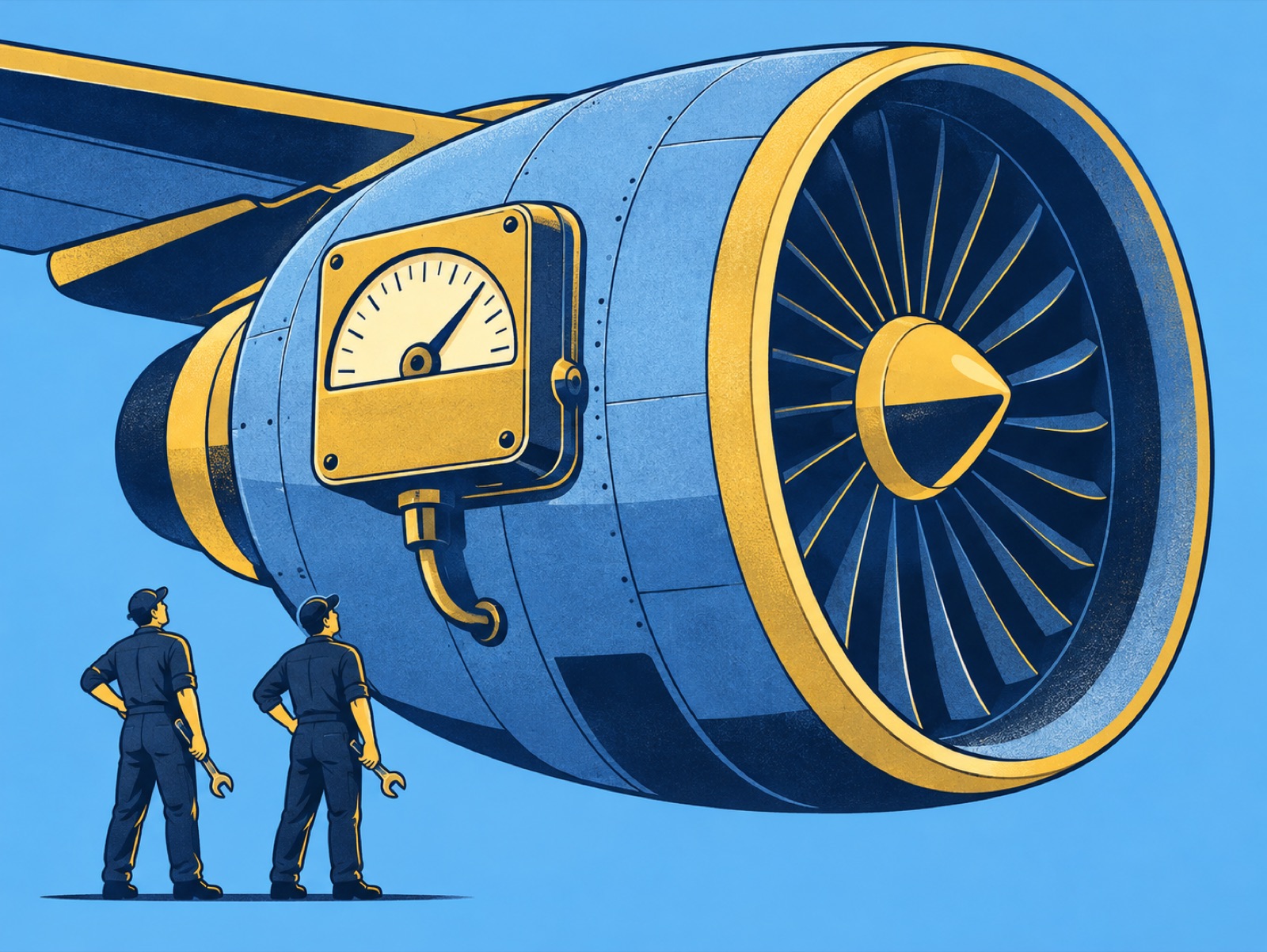
A full repair shop is not necessarily good news for Rolls-Royce. Under its TotalCare service model, an airline pays through a dollar-per-engine-flying-hour mechanism, while the manufacturer takes on specified maintenance risks. More work than expected can mean more cost to absorb, rather than another bill for the airline. The attraction of selling an engine with years of services attached depends on what it takes to keep that engine flying.
The scale is substantial. Civil Aerospace reported £6.186bn of underlying revenue and £1.567bn of underlying operating profit for the six months to June 30th 2026, a 25.3% margin. Services revenue was approximately £4.2bn. The July 30th results identify these as underlying measures; they are not statutory segment results. They describe a business whose relationship with an airline extends well beyond delivery of the engine.
Rolls-Royce’s TotalCare description says the package transfers risks relating to time on wing and planned or unplanned shop-visit costs to the manufacturer. Maintenance planning and repair are included. The airline gains greater predictability; the provider has to manage the work and costs behind that assurance.
That makes durability a financial issue as well as an engineering one. An engine that can operate safely for longer before an overhaul can improve the economics of the service commitment. Expensive work arriving earlier than expected can make a contract less profitable than it appeared at signing. Reliability affects the cost of promises already made, not just the appeal of the next engine sale.
The exact allocation depends on the contract. But the distinction from charging separately for each intervention matters: additional maintenance that could generate another bill in a transactional arrangement may instead be a cost within a long-term package. Assessing the service business by workshop activity alone would miss which side bears that cost.
Flying hours create a related tension. More activity helps determine customer payments under the described mechanism, but also moves engines towards maintenance events. Stronger receipts today cannot be extrapolated without considering the future work they help fund. The useful relationship is between payments over time and the resources required to fulfil the agreement.
Rolls-Royce’s maintenance-network plan envisages expanding capacity and capability by 2030 through facilities and more efficient inspection and repair technology. This is planned capacity, not a claim that the work is complete. Engine sales can create service obligations long before all the associated maintenance reaches the workshop.
Capacity also has to fit the job. An empty bay is not immediately useful without people trained for the engine, the necessary parts and specialist equipment. The challenge is to prepare for the future workload without assuming that floor space alone will remove a bottleneck. Selling a service commitment and being able to honour it are different stages of the business.
The accounts add another timing issue. Rolls-Royce reported £356m of long-term service-agreement revenue catch-ups in the first half, compared with £126m a year earlier. Those revisions should not be mistaken for a new stream of flying-hour cash received in the same period. The report separately discusses service receipts, revenue recognition and contractual improvements.
Long agreements rely on estimates of future activity and cost. Revising those estimates can be appropriate while still making a single period’s revenue or margin less straightforward to project. A catch-up changes the reported picture; it does not remove the physical maintenance obligation. Cash receipts, recognised revenue and the workshop schedule need to be read together.
The service model gives Rolls-Royce a continuing interest in an engine after it leaves the factory. Its economics improve when engines fly reliably and maintenance can be delivered at a manageable cost. The most revealing evidence will be durability, the network’s ability to handle the work and cash generation as that work falls due. A larger installed fleet offers more business, but also more promises to keep.
Netflix has cut its advertising-revenue forecast as new capabilities arrive more slowly than planned. Satisfying advertisers takes more than a growing audience.

IKEA’s new European price cuts renew a difficult bet: accepting less on each sale can strengthen the business only if customers respond.

Costco’s membership income gives it room to compete on price. Keeping that income requires the bargain to remain convincing.