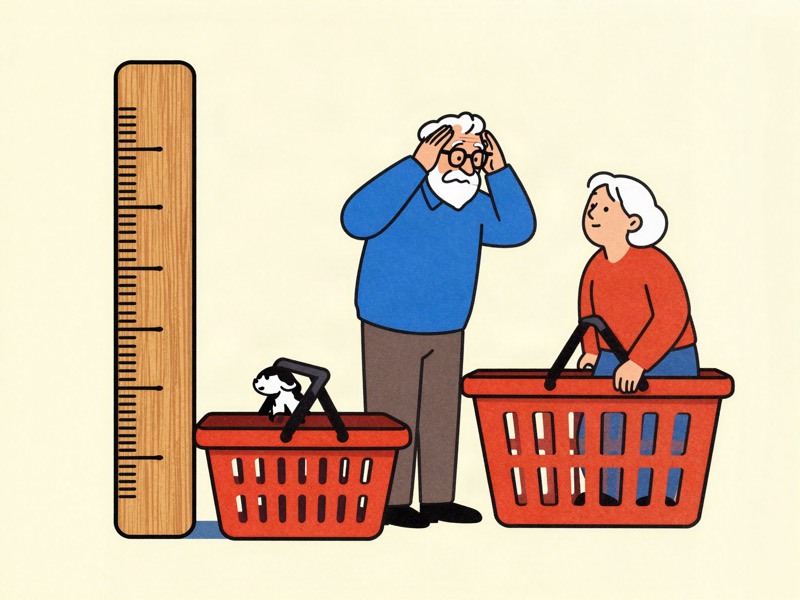
Inflation measurement
A different yardstick
America’s pension adjustment shows why the inflation rate on the news is rarely the one in a household budget
A widening trade gap raises useful questions about demand and financing, but cannot answer them on its own
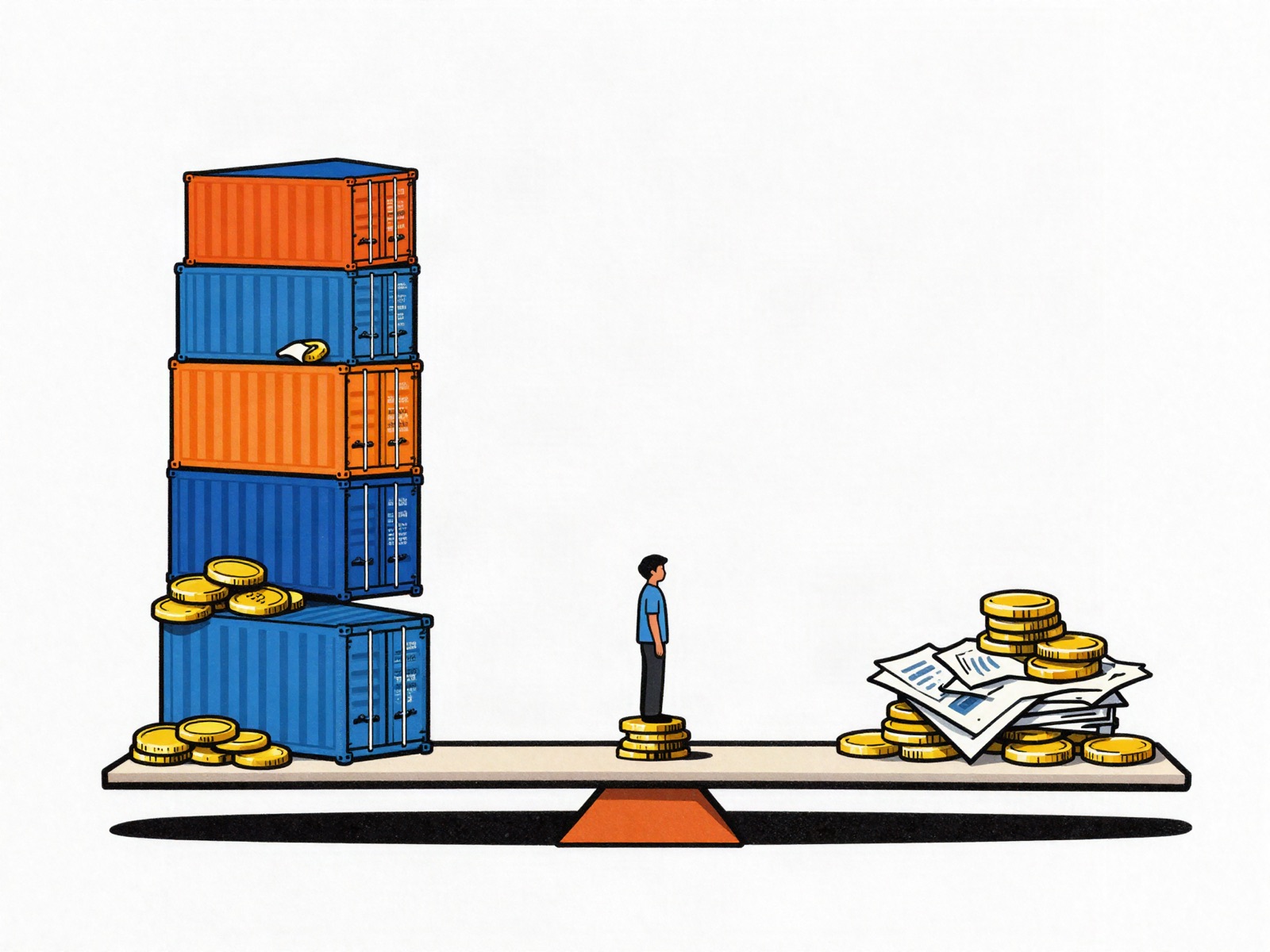
America imported more in August, and its trade deficit widened. Figures released on October 6th put the goods-and-services gap at $105.6bn. Imports were $420.8bn, the highest on record, and exports $315.2bn, according to the Bureau of Economic Analysis and Census Bureau. Those figures describe cross-border commerce. They do not show that the country lost the difference in the way a company loses money.
The distinction is particularly useful when trade statistics become a scorecard for economic policy. A deficit can accompany vigorous investment, weak saving, strong consumer demand or a combination of them. The first task is to identify what is being measured. The next is to examine what lies behind it.
The trade balance subtracts imports of goods and services from exports of goods and services. A country can run a deficit in merchandise while earning a surplus from services. August’s American release shows exactly that pattern. Looking only at containers and factory products misses such activities as travel, financial services and the use of intellectual property.
The current account is broader. Alongside trade, it includes primary income, such as returns on cross-border investments, and secondary income, such as current transfers. A country with substantial overseas assets may receive income even when the corresponding goods were produced elsewhere. A transfer can move purchasing power without representing a purchase of this month’s exports.
These categories also use different reporting calendars. The monthly trade release cannot simply be relabelled the monthly current account. BEA’s latest quarterly international-transactions report, issued on September 24th, covers the second quarter. It contains income and transfer information that the August trade headline does not. Mixing the two periods produces a false impression of precision.
The August amounts are measured in current dollars and adjusted for seasonal patterns. They are not adjusted for price changes. More expensive imports can raise the dollar import bill without a proportionate increase in the quantity bought. Anyone drawing a conclusion about real production or purchasing volumes must make that additional distinction.
The current-account balance can also be understood through national saving and investment. An economy that invests more than it saves domestically draws on resources from abroad. The external accounts record the corresponding financial transactions. This relationship joins households, firms and government into an economy-wide picture; it is not an assertion that every importer takes out a foreign loan.
Suppose, as a hypothetical example, a business imports machinery that expands future production. The purchase contributes to imports now. Its economic value depends on what the equipment subsequently produces and what it cost to finance. An equally sized purchase of goods consumed immediately has different consequences. The deficit alone does not distinguish between them.
Financing can also take different forms. A foreign investor might acquire shares, buy a bond or establish a business. These transactions carry different contractual obligations and distribute risk differently. An equity claim is not identical to debt that must be refinanced on a fixed date. The composition of external financing therefore matters alongside its size.
Nor does an accounting identity establish a single direction of causation. Capital seeking a home can influence exchange rates and domestic spending. Changes in domestic saving or investment can influence the demand for foreign financing. The identity ensures that the accounts fit together; identifying which force moved first requires evidence beyond the identity.
BEA also publishes the net international investment position: the stock of residents’ foreign financial assets minus their liabilities to foreign residents. The current account records flows over a period. The investment position is a balance sheet at a date. Changes in that balance sheet reflect transactions and movements in asset prices and exchange rates.
This is why the change in a country’s net foreign position need not equal its current-account deficit. If the market value of foreign-owned domestic shares rises, measured liabilities can increase without a matching new inflow of cash. If overseas assets change value, the other side of the balance sheet moves too. Valuation effects are essential to interpreting the stock.
A familiar company comparison therefore leads astray. National exports are not the revenues of a single enterprise, and national imports are not simply its operating expenses. The buyers and sellers are different households and businesses making transactions for different reasons. The external accounts aggregate those transactions; they do not turn the country into one consolidated retailer.
The more revealing questions concern durability. Is foreign financing supporting productive investment? Are borrowers exposed to foreign-currency debt or frequent refinancing? Could a reversal of financial flows force a sudden contraction in domestic spending? Those questions connect the current account to balance-sheet risks instead of treating the trade gap as a standalone alarm.
There is a similar caution for policy. A restriction on a particular import may change suppliers, prices or trade routes. Its effect on the overall external balance also depends on how it changes saving, investment, exchange rates and demand. A smaller bilateral deficit need not mean a smaller deficit with the world.
October’s release is useful evidence of the value and composition of August trade. It is a starting point for investigating demand and financing, not a complete diagnosis of either. The economic story becomes clearer when the ledger is read on both sides—and when flows, stocks and price changes are kept in their proper columns.
America’s pension adjustment shows why the inflation rate on the news is rarely the one in a household budget

The fiscal-year accounts are easier to understand once annual borrowing, outstanding debt and interest payments are kept apart

PepsiCo’s latest results offer a timely way to understand why an earnings release contains more than one version of performance