Capital markets
The window blows open
2026 is the biggest year for American stock listings on record. Much of the money went to a single company
America’s tech giants are spending like railway barons. Investors are starting to ask what they will get back
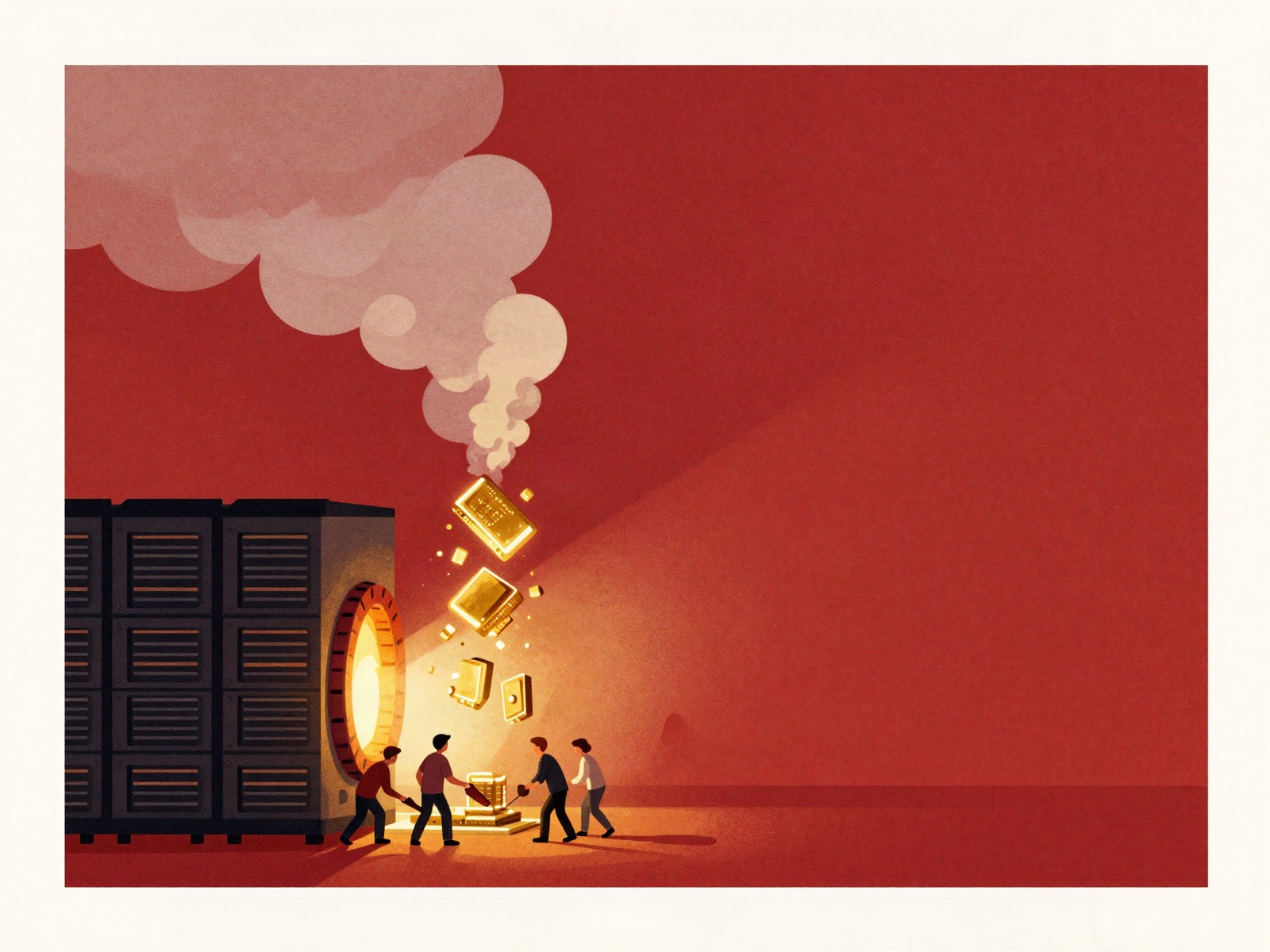
In the 1840s Britain was gripped by a railway mania. Lines were built to towns that did not need them, shares soared and then collapsed, and many investors were ruined. Yet the railways got built, and the country that emerged was richer for them. Investors in America’s technology giants are now asking which half of that story they are living through.
The numbers are without precedent. After their second-quarter results in July, the four biggest cloud companies raised or reaffirmed plans to spend around $730bn-745bn on capital investment in 2026, most of it on data centres, chips and the power to run them. Amazon expects to spend about $220bn, up from $200bn, citing the soaring cost of memory chips. Alphabet raised its range to $195bn-205bn. Meta narrowed its forecast upwards, to $130bn-145bn. Microsoft’s figure, reported at between $175bn and $190bn depending on how its leases are counted, is the least clear. The group spent roughly $410bn in 2025. Analysts at several banks expect the total to exceed $1trn in 2027.
Sources: company guidance as reported. Microsoft’s figure depends on lease accounting. The four spent about $410bn in 2025.
Unlike the internet startups of 1999, the companies doing the spending are among the most profitable in history, and most of the money comes from their own cash flows. Demand is visible rather than hoped for. Google Cloud’s revenue grew by 63% in the first quarter and Amazon Web Services by 28%, and both say they cannot build capacity fast enough. Google Cloud reports a backlog of contracted future revenue of more than $460bn.
The spending is also showing up in profits elsewhere. Nvidia, the leading maker of AI chips, became the first company worth more than $5trn in April and was valued at around $5.8trn in early October. FactSet, a data firm, estimates that earnings for the S&P 500 grew by almost 30% year on year in the third quarter, the third straight quarter above 25%. Micron, a memory-chip maker, has joined the ten biggest companies in the index.
The worries start with cash. Building data centres turns businesses that used to need little capital into heavy-industry operations. Analysts’ tallies show free cash flow falling sharply at Alphabet and Microsoft in early 2026, and Alphabet has raised $25bn in a bond sale. Investors have noticed: Alphabet’s shares fell by about 5% after it raised its spending plans in July.
Some of the extra spending buys nothing new. Microsoft attributed about $25bn of its 2026 budget to higher prices for components; Amazon blamed memory costs for its increase. And much of the revenue that justifies the spending flows in a circle. Chipmakers sell to cloud providers, which rent capacity to AI developers, which are partly funded by the chipmakers and cloud providers themselves. A stumble anywhere in the loop would travel fast.
The stockmarket is unusually exposed to that loop. The ten biggest companies make up about 39% of the S&P 500, close to the highest share in a century, and most of them are betting on the same theme.
T. Rowe Price, an asset manager, describes the situation as two overlapping booms. One is near term and underwritten by measurable demand; the other is longer term and speculative. History suggests both can be real at once, and that investors can lose money even when the technology wins. The NASDAQ fell by 78% between 2000 and 2002 even though the internet went on to remake the economy.
The railways offer a subtler lesson. Railway shares made up 63% of America’s stockmarket in 1900 and less than 1% today. Yet according to Dimson, Marsh and Staunton, who track returns back to 1900, they still beat the overall market over that period. A declining industry can be a good investment, and a transformative one a bad investment. What decides it is the price paid.
That is the real $700bn question. Nobody seriously doubts that AI will be useful. The question is whether the returns on today’s spending will be high enough to justify what investors are paying for the companies doing it. The profits of 2026 suggest they might be. The cash flows suggest that, for now, nobody can be sure.
2026 is the biggest year for American stock listings on record. Much of the money went to a single company

Seven months after Iran closed the Strait of Hormuz, the bill for the biggest energy-supply shock on record is still arriving
An oil shock has pushed America’s central bank into its first rate rise since 2023. Kevin Warsh may not be done