
Economic statistics · Evergreen explainer
Taking the calendar out
Monthly economic figures become more useful when recurring patterns are removed, but the result remains an estimate
Forward contracts price the timing of money as well as the currency, which changes how foreign returns should be read
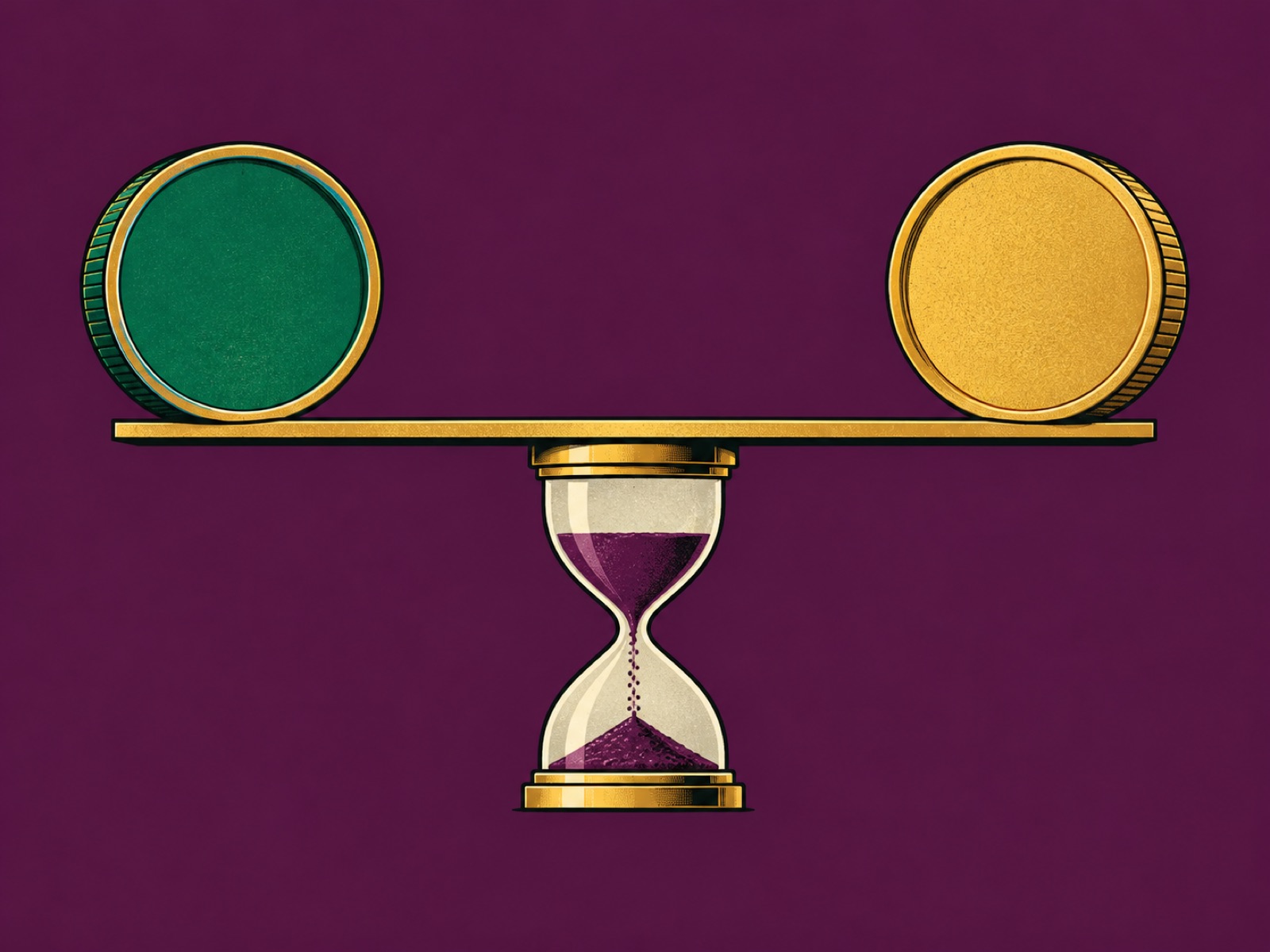
A company expecting dollars in six months can agree today how many pounds it will receive for them. The contract removes one uncertainty from its budget. Yet the agreed rate may differ from today's exchange rate even when neither party is making a particular prediction about where sterling will trade in six months.
The date is part of the price. Interest can be earned, and financing costs incurred, before the currencies change hands. A forward therefore has to be read alongside the interest rates for both currencies over the same period.
The Reserve Bank of Australia's guide to hedging instruments explains how forwards let exporters and importers agree future currency purchases or sales. The exposure comes first. The appropriate direction of the hedge depends on which currency the business will receive and which it will need to spend.
Consider a deliberately invented example with no fees, credit risk, taxes or restrictions on borrowing. Today's exchange rate is $1.20 per pound. One-year dollar interest is 5%, while sterling interest is 3%, with borrowing and lending available at the stated rate in each currency. These are hypothetical rates, not market quotes or central-bank policy rates.
Starting with £1, an investor could keep it in sterling and finish with £1.03. Alternatively, it could exchange it for $1.20, earn dollar interest and finish with $1.26. A forward rate of about $1.2233 per pound makes that $1.26 worth £1.03 when converted back at the agreed future rate.
The calculation is $1.20 multiplied by 1.05 and divided by 1.03. In this frictionless example, the higher dollar interest rate does not deliver an extra risk-free return after currency exposure is fully hedged. The forward conversion offsets the advantage.
This relationship is known as covered interest parity. The word “covered” refers to fixing the future currency conversion rather than leaving it exposed to the eventual spot rate. A September 2016 Bank for International Settlements analysis explains the relationship and why actual markets can depart from it.
The same BIS study documented persistent deviations after the global financial crisis. It linked them to demand for currency hedging combined with constraints on arbitrage, including the cost and availability of bank balance sheets. The cross-currency basis measures such a departure from the simple funding relationship. Those findings concern the post-crisis market studied in 2016; they are not a current basis quote.
Exploiting a price gap takes resources. A theoretical opportunity can require borrowing capacity, collateral, credit limits and the ability to transact at the assumed prices. Those resources are not unlimited. Nor do all borrowers obtain the same interest rate. The clean calculation is a benchmark for understanding an actual quote; it does not establish an executable risk-free profit.
An FX swap combines an exchange now with an agreed reverse exchange later. The RBA describes using these transactions in its own international market operations. A forward-only hedge of a future receipt and a swap that provides currency today solve related but different timing problems.
For a business, fixing the exchange rate does not guarantee that the underlying invoice will be paid. If an export order is cancelled, the obligation under the forward may remain. A hedge sized to an uncertain forecast can itself become an exposure when the forecast changes. The amount and date therefore matter as much as the currency pair.
For an investor, a foreign bond's headline yield is not automatically the return available in the investor's home currency. A meaningful comparison includes the hedge terms, credit risk, maturity and potential changes in the bond's price. Rolling a short hedge against a long-lived investment also leaves future renewal terms unknown.
For the exporter expecting dollars in six months, the test is whether the contract matches the receipt and fixes a sterling value the business can budget around. A better spot rate six months later would not erase that certainty's value. A cancelled order or badly matched contract would raise a different problem. Judging the hedge means separating the price of certainty from the temptation to assess every decision with hindsight.
Monthly economic figures become more useful when recurring patterns are removed, but the result remains an estimate

Purchasing-power comparisons measure domestic output differently from the exchange rates used to pay overseas bills

The ease of trading an ETF share does not settle the cost of trading the assets underneath it