
Economic statistics · Evergreen explainer
Taking the calendar out
Monthly economic figures become more useful when recurring patterns are removed, but the result remains an estimate
Purchasing-power comparisons measure domestic output differently from the exchange rates used to pay overseas bills
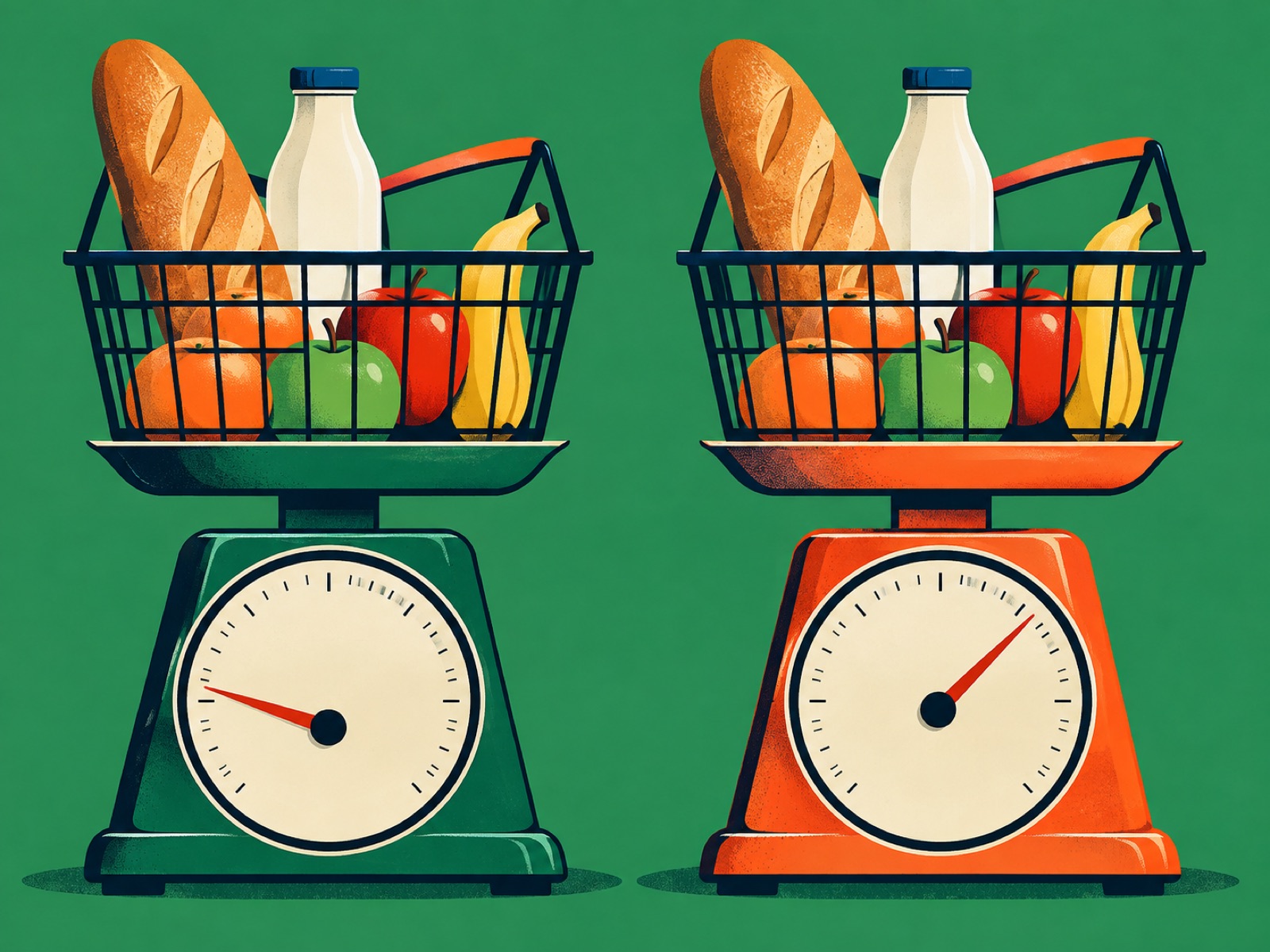
China's 2021 economy came with two strikingly different price tags: about 28.82 trillion international dollars at purchasing power parity and US$17.81 trillion at market exchange rates. The National Statistical Society of China reported both in a statement published on the national statistics website in June 2024. They describe the same year's production, expressed in different units and converted for different purposes.
The gap is not an arithmetic mistake. A market exchange rate tells us what local money can buy in foreign currency markets. Purchasing power parity, or PPP, adjusts for differences in the prices of goods and services. Which conversion is useful depends on what the comparison is meant to establish.
An exchange rate is indispensable when a company needs dollars to pay a dollar invoice. But much of an economy's production consists of services and other output consumed locally. A haircut, a school lesson or a building does not necessarily have the same price in two countries after conversion at the currency market's rate.
PPP conversion attempts to account for those differences using comparable prices across the economy. It is a statistical conversion factor, not an exchange rate available at a bank counter. The World Bank's International Comparison Program explanation describes PPPs as both currency converters and measures of relative price levels. An international dollar represents the purchasing power of a US dollar in the United States; it is a statistical unit.
Consider a deliberately invented basket costing 200 local currency units in one economy and US$100 in the United States. The basket's PPP conversion is two local units per international dollar. If the market rate is four local units per dollar, converting the first basket at that rate values it at $50, although it contains the same assumed quantities. The identical basket is a teaching assumption; national PPPs require a much broader comparison.
The World Bank released its 2021 comparison in May 2024, covering 176 participating economies. It compared an economy-wide range of expenditures rather than one consumer product. Its release explained that lower domestic price levels can make poorer economies appear smaller when their output is converted at market rates.
If the question is how much output an economy produces relative to another, PPP is often useful. If the question is how much a foreign-currency liability costs, the market rate has a direct financial role. The IMF's explanation of PPP weights makes this distinction and shows why the choice also affects estimates of aggregate global growth: different conversions give countries different weights.
A hypothetical country with inexpensive domestic services could have a substantial PPP economy yet struggle to obtain the foreign currency needed for imported machinery. Domestic purchasing power cannot simply be transferred into an overseas supplier's bank account. Conversely, a sharp exchange-rate fall can reduce measured dollar GDP without an equally sudden disappearance of factories, working hours or local services.
Neither total GDP measure tells us what a typical household can afford. A large population can produce a large economy alongside modest output per person. Even a per-person average hides distribution. The ICP also publishes consumption measures, including actual individual consumption, which can be more relevant to some questions about material living standards. The appropriate comparison depends on whether the reader is asking about production, household consumption or financial capacity.
PPP comparisons require difficult judgements about comparable products, quality and spending patterns. Prices are observed at benchmark dates, with estimates used between or beyond those rounds. The World Bank warns that PPPs are statistical approximations subject to measurement and other errors, and that they should not be used as indicators of currency overvaluation or undervaluation.
A claim that a currency must rise to its PPP rate therefore goes beyond what the comparison establishes. It would require a separate argument about asset markets, trade, capital flows and the adjustment of prices. A measure built to compare the volume of output is not automatically a trading forecast.
A league table headed simply “GDP in dollars” therefore leaves essential work undone. The unit, conversion method and reference year belong beside the number, as does any adjustment for population. The two Chinese totals are intelligible with those labels attached. Remove them, and a difference in measurement starts to look like a dispute over how much China produced.
Monthly economic figures become more useful when recurring patterns are removed, but the result remains an estimate
Forward contracts price the timing of money as well as the currency, which changes how foreign returns should be read

The ease of trading an ETF share does not settle the cost of trading the assets underneath it