
Youth employment
The first job is still the hardest qualification
An October ILO brief puts hiring practices under scrutiny as young people struggle to get the experience employers demand.
Power demand is growing, but connection delays can leave factories and generators waiting. A shrinking queue offers little reassurance unless projects enter service.
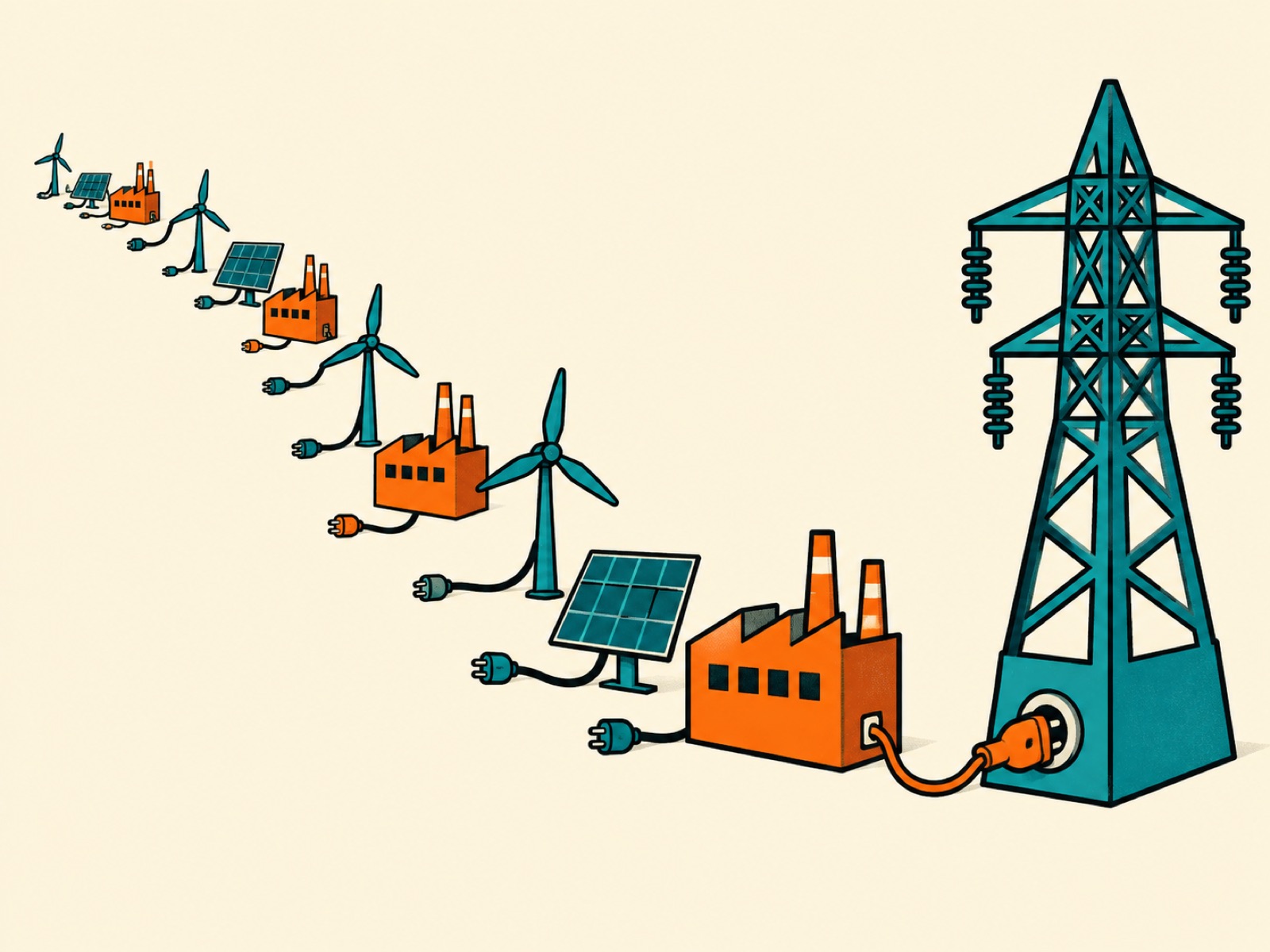
A factory can have finance, workers and customers lined up, yet still be waiting for permission to switch on. Its electricity connection is a condition of production, and the network must make room for competing claims on supply. In its July update, the International Energy Agency forecast global electricity demand growth of 3.6% in 2026 and 3.8% in 2027, following 3% in 2025. Industry, cooling, appliances and electrification all feature among the drivers, alongside data centres.
That July forecast sets the scale of the planning problem; the annual results remain to be seen. Equipment can be ordered and buildings completed before the network serving them is ready. For the business waiting to connect, money has already been committed while the start of production remains uncertain. The cost of the delay extends beyond the grid operator.
The IEA's February grid analysis highlighted a mismatch in construction times. Planning and completing new network infrastructure can take five to 15 years, compared with one to five years for wind and solar projects. It also reported more than 2,500 gigawatts of renewable, large-load and storage projects waiting in grid queues worldwide. Those are different kinds of proposed capacity, not electricity already available to consumers.
This creates a coordination problem. Generators need a route to customers; customers need confidence that supply will arrive; network planners need credible information about both. Waiting for every uncertainty to disappear can postpone necessary investment. Building for every proposal can leave customers paying for capacity that is not used.
The sequence of commitments matters. A connection timetable is useful only if it can be reconciled with equipment delivery and a customer's plans. Network decisions also need to survive cancellations: a line justified by several prospective users may become a different proposition if only one proceeds.
American connection data illustrate the gap between applications and operating assets. Lawrence Berkeley National Laboratory's 2026 edition recorded roughly 8,200 projects seeking connection at the end of 2025. They comprised 1,312 gigawatts of generation and about 749 gigawatts of storage. The dataset covers operators representing approximately 98% of installed US generating capacity.
Total active queued capacity shrank by 10% during 2025, but the laboratory attributed that to high withdrawals and fewer new applications. A smaller queue therefore does not by itself demonstrate quicker delivery. Among projects completed in 2025 in regions with data, the median time from connection request to commercial operation exceeded five years.
Withdrawals can make the queue more credible by removing unviable projects, but delivery must be measured separately. A useful account would show what entered service as well as what left the list. Otherwise, faster administrative clearance and slower investment can produce the same reassuring-looking decline.
The US and IEA totals have different coverage, project categories and stages, so adding them would be misleading. Both describe proposed capacity, measured in gigawatts, rather than annual energy production. Storage shifts the availability of electricity; it needs energy from elsewhere to charge.
The IEA identifies ways to connect projects before every major reinforcement is completed. One is a conditional connection under which a user's output or consumption can be limited at specified times. Better use of existing lines and other network upgrades can also increase usable capacity. These possibilities complement construction; their suitability depends on the particular network and customer.
For a flexible industrial process, accepting occasional restrictions may be preferable to waiting years. For an operation that cannot tolerate interruption, the same arrangement could be unsuitable. Contractual clarity matters: faster access is valuable only if the customer understands the service it is receiving.
There is also a distributional question. Network investment must ultimately be paid for. Regulators need to weigh the benefits of additional capacity against the risk of charging existing customers for projects that never materialise. Credible milestones and transparent connection processes can help expose that risk before it becomes a bill.
For a prospective factory, the useful answer is a connection date, the service it can expect and the price of securing it. For existing customers, it is assurance that new projects will bear an appropriate share of the cost. Grid policy succeeds when it makes those commitments credible enough for production to begin.
An October ILO brief puts hiring practices under scrutiny as young people struggle to get the experience employers demand.

September's rise in international food prices is a warning signal. Household affordability depends on a longer chain of costs and incomes.
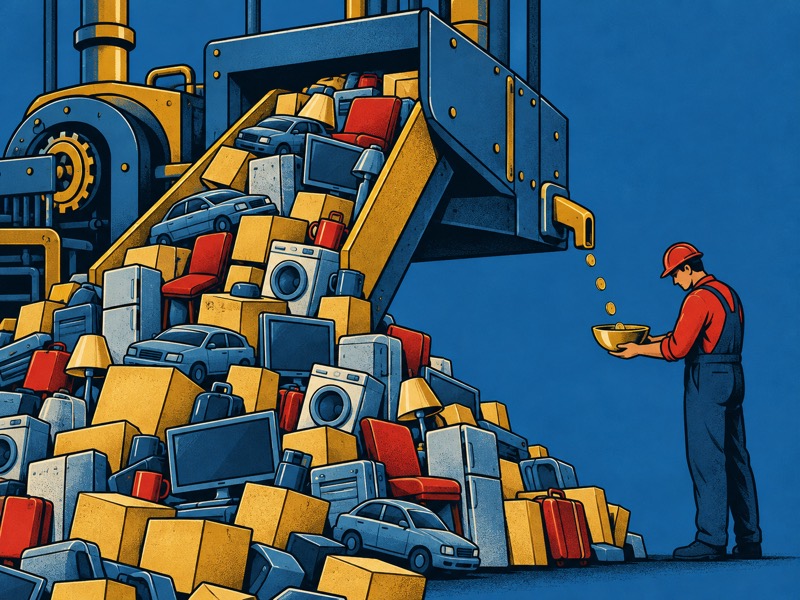
US nonfarm productivity rose in the year to Q2 2026 while real hourly compensation edged down. The household benefit needs to be measured separately.