
Youth employment
The first job is still the hardest qualification
An October ILO brief puts hiring practices under scrutiny as young people struggle to get the experience employers demand.
US nonfarm productivity rose in the year to Q2 2026 while real hourly compensation edged down. The household benefit needs to be measured separately.
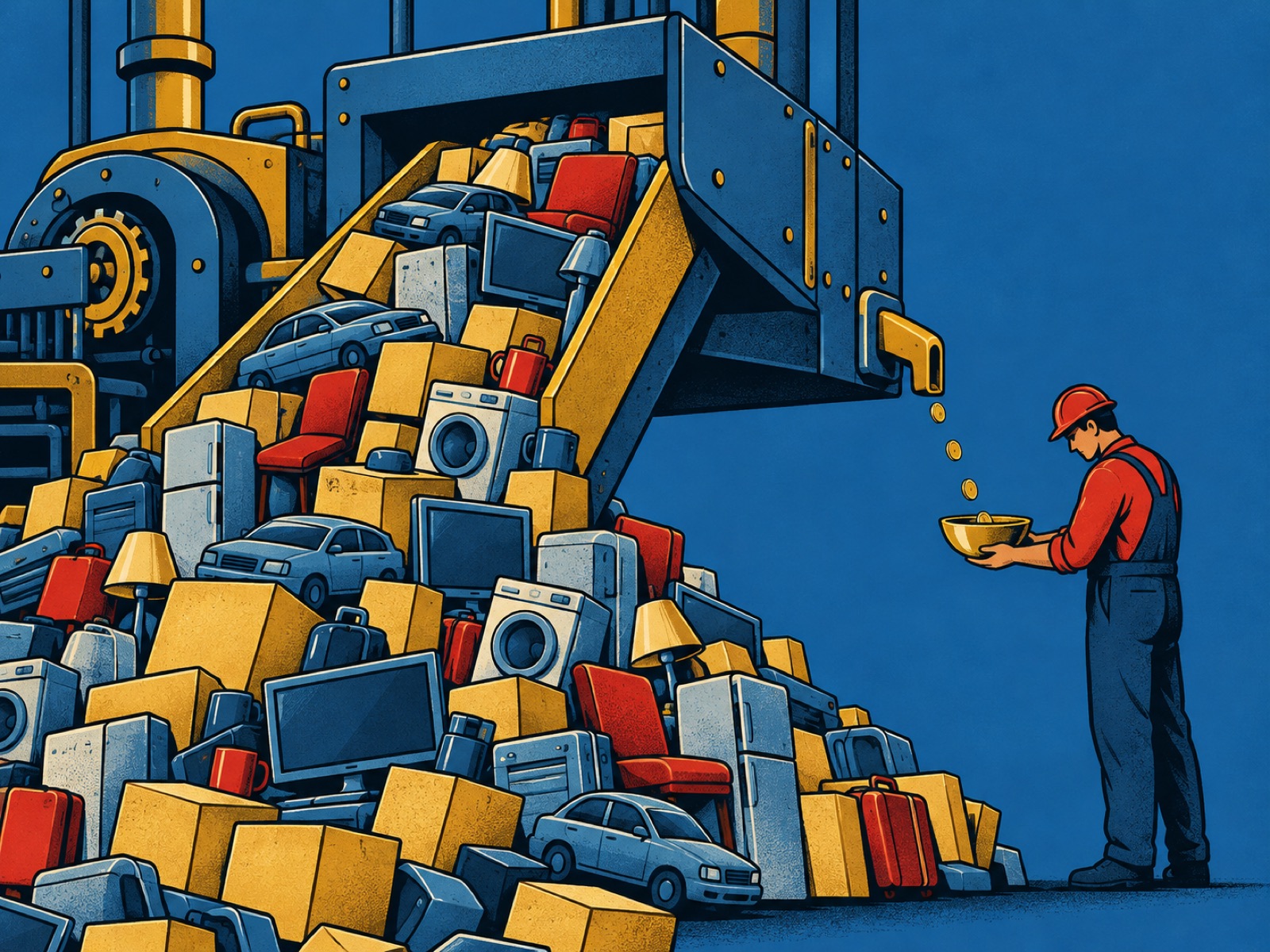
In America's nonfarm business sector, output per hour rose by 2.2% in the year to the second quarter of 2026 while real hourly compensation slipped by 0.1%. The Bureau of Labor Statistics reported both figures on September 3rd. Together they leave a question for anyone promising that more efficient production will quickly improve living standards: how does the additional output reach the household?
The quarterly productivity increase was 1.4% at a seasonally adjusted annualised rate, a separate comparison from the four-quarter change. This is a specific period in a specific part of the economy, with no proof of a permanent separation between productivity and compensation. But the divergence is enough to show why the household benefit must be measured directly.
A worker cares about what pay can buy. A business cares about compensation relative to the output it produces. Those questions use different comparisons. Consumer prices can erode the value of earnings even as a company obtains more output from an hour of labour. Productivity growth therefore need not feel like an immediate improvement to a household.
The BLS measure includes compensation beyond basic wages and adjusts the real series for consumer prices. Unit labour costs answer another question by comparing compensation with productivity. A business may therefore see an improvement in its labour-cost position while its employees see little improvement in what their compensation buys. Neither series alone explains how the gains have been distributed.
Consider the practical implication. If an efficiency improvement lowers the cost of producing a service, its benefits could appear through higher pay, lower customer prices, increased margins or expansion. The statistical gain does not choose among those channels. To assess the household dividend, one must follow compensation and prices as well as output.
The American figures sit within an uneven international picture. The OECD's June productivity compendium estimated that economy-wide labour productivity grew by 1.2% across its members in 2024. The United States recorded 2.2%, compared with 0.2% in the European Union. These are annual, total-economy comparisons, not the same coverage or period as the BLS quarterly business-sector figures.
The compendium also found that the pace of productivity improvement had roughly halved since the early 2000s. An encouraging year therefore sits inside a longer slowdown. Its discussion of artificial intelligence was cautious: the data suggested possible benefits, rather than isolating a proven economy-wide causal contribution.
Output per hour can change because firms buy better equipment, reorganise work, alter their mix of products or experience shifts in demand. These explanations can coexist. To attribute a gain to AI, an analysis would have to distinguish its contribution from those other changes. The arrival of a widely discussed technology and a rising aggregate are only the starting observations.
The OECD's 2026 structural-reform overview places emphasis on the spread of technology and effective business practices, alongside investment in skills and infrastructure. It warns that the benefits of artificial intelligence could remain concentrated among large firms without broader diffusion and adequate competition.
That puts the ordinary business at the centre of the productivity question. Buying access to a tool is one step; adapting a workflow and developing the skills to use it are others. A gain concentrated in a few leading firms has a different reach from an improvement adopted by their suppliers and competitors. Competition can help turn those efficiencies into pressure on customer prices.
An investment announcement therefore leaves several economic questions unanswered. When will the equipment or software be used, what will it change, and who will receive the resulting value? Following those steps would make productivity policy more informative than counting spending commitments alone.
For the period covered by September's release, American businesses obtained more output per hour while real hourly compensation edged down. Further productivity gains would expand the scope for higher living standards. Evidence that the dividend has arrived will have to come from compensation and consumer purchasing power, alongside the production figures.
An October ILO brief puts hiring practices under scrutiny as young people struggle to get the experience employers demand.

September's rise in international food prices is a warning signal. Household affordability depends on a longer chain of costs and incomes.
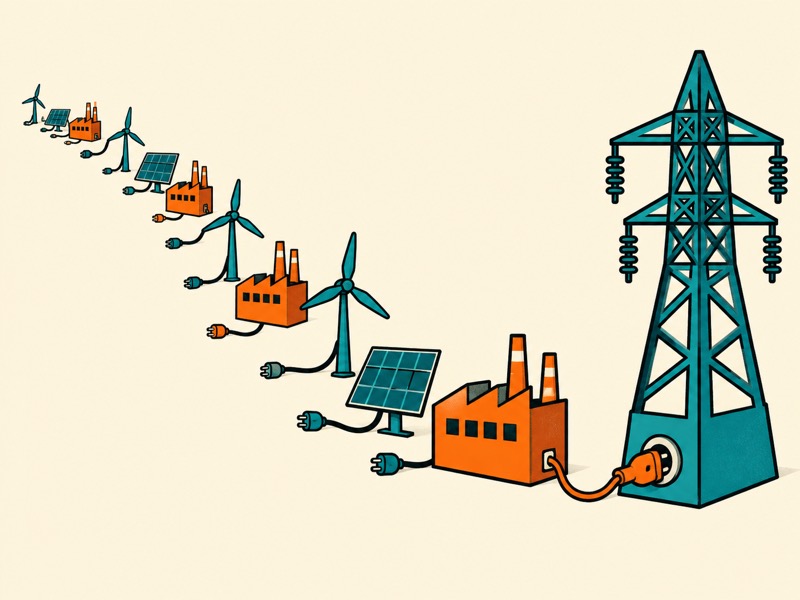
Power demand is growing, but connection delays can leave factories and generators waiting. A shrinking queue offers little reassurance unless projects enter service.