
Bond markets
Five per cent and counting
America’s long-term borrowing costs have hit their highest in a generation. Deficits, inflation and a shrinking Fed share the blame
America is rewiring its stockmarket for round-the-clock, on-chain trading. The hard part is not the technology
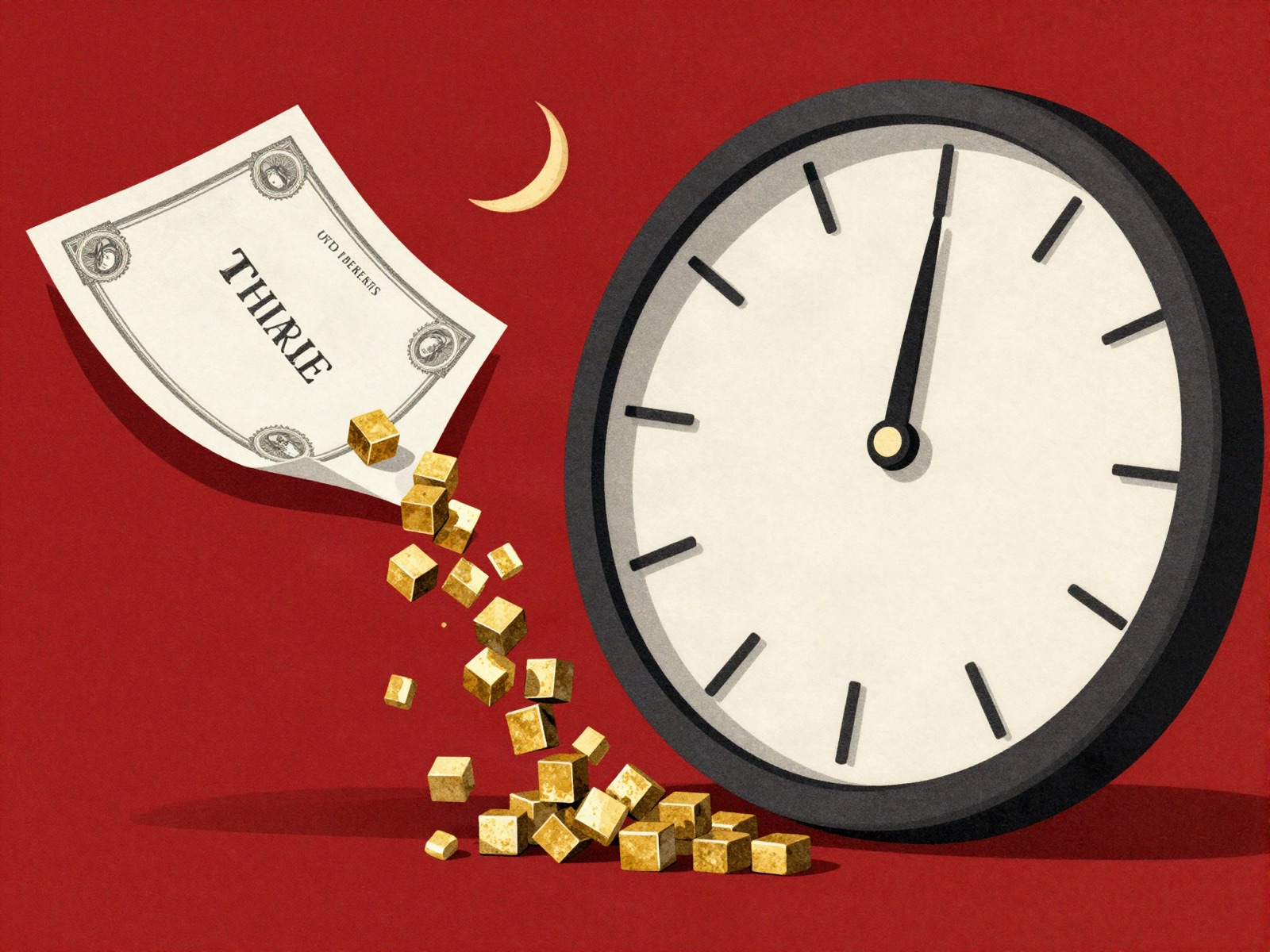
For most of its history the American stockmarket kept office hours. Trading ran from 9.30am to 4pm, Monday to Friday, and settling a trade, the actual swap of shares for cash, took days. Both limits are now disappearing. Within a year Americans may be able to trade shares in their favourite companies at three in the morning, on a blockchain, with settlement in minutes.
The changes have come quickly. In March 2026 the Securities and Exchange Commission (SEC) reportedly approved Nasdaq’s rules for trading tokenised shares, with the New York Stock Exchange following in April. Under Nasdaq’s design, tokenised and conventional shares trade on the same order books and clear through the Depository Trust Company, the plumbing at the heart of the market. The Depository Trust & Clearing Corporation (DTCC) began limited live trades of tokenised securities in July and planned a full launch in October, starting with stocks in the Russell 1000 index, big exchange-traded funds and Treasuries.
On September 17th the SEC went further. It granted temporary exemptive relief, for five years, letting qualifying venues trade tokenised versions of American shares without registering as full exchanges or brokers. The condition that matters most is that each token must represent real ownership of an underlying share. “Synthetic” tokens that merely track a share price are excluded. On the same day the SEC held a roundtable on 24-hour trading. Several exchanges have already won approval for long overnight sessions, and Intercontinental Exchange, which owns the NYSE, has applied with a crypto exchange, OKX, to run round-the-clock trading in tokenised American shares.
The case for tokenisation rests on speed and reach. Settlement has already been shortened from five days to one over the past three decades, most recently in May 2024. Each step reduced the risk that one side of a trade fails while money is in transit. A blockchain could, in principle, settle in minutes, freeing up the collateral that brokers must post while trades are pending.
Source: SEC. Tokenised settlement aims for minutes.
Round-the-clock trading also suits a global investor base. Asian and European buyers of American shares currently have to trade in the middle of their night or through derivatives. Retail investors, who now account for a fifth or more of trading volume, are used to apps that never close.
The first problem is liquidity. A stock that trades on more venues and at more hours does not attract proportionately more trading; the same orders get spread more thinly. Overnight markets are likely to have wide spreads and to move sharply on small orders, which matters most when big news breaks while America sleeps.
The second is what a token actually is. Europe offers a warning. Robinhood, a trading app, sells tokenised American shares to European customers. Its first-generation tokens, sold under MiFID II, the EU’s market rules, are derivative contracts rather than claims on shares, according to one analysis; a newer version is backed one-for-one by real shares. Investors who do not read the fine print may not know which they own, or what happens to it if the issuer fails. The SEC’s insistence on real ownership is meant to prevent that confusion in America.
The third is the protections that come with conventional markets. Circuit breakers, rules against trading through better prices on other venues, and the consolidated reporting of trades were all built for exchanges with opening and closing times. Extending them to a 24-hour, multi-venue, partly on-chain market is a regulatory project as much as a technical one.
So far the sums involved are small: one estimate put tokenised equities on public blockchains at roughly $300m in the first quarter of 2026, a rounding error next to a stockmarket worth tens of trillions of dollars. But the institutions now building the rails are the core of the market, not crypto startups. When the DTCC and the big exchanges move, the rest of the industry usually follows.
America’s long-term borrowing costs have hit their highest in a generation. Deficits, inflation and a shrinking Fed share the blame

Seven months after Iran closed the Strait of Hormuz, the bill for the biggest energy-supply shock on record is still arriving
An oil shock has pushed America’s central bank into its first rate rise since 2023. Kevin Warsh may not be done