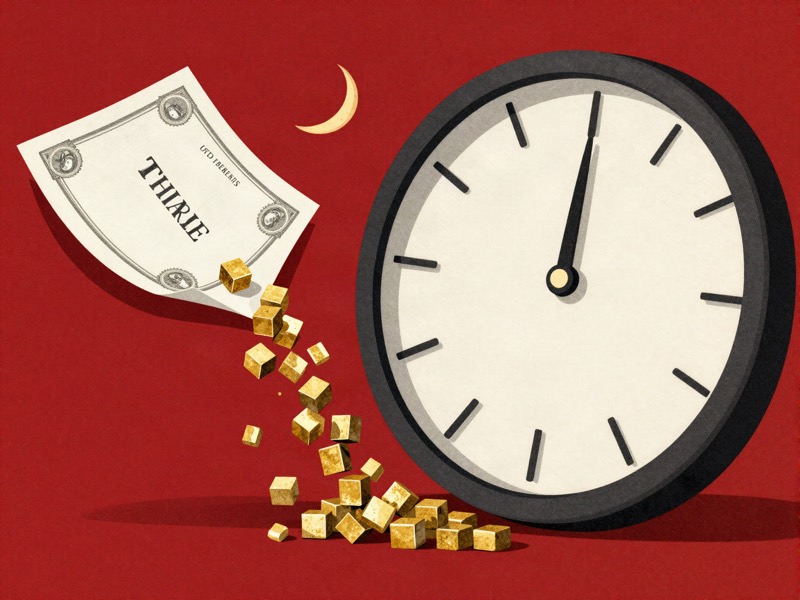
Market plumbing
Shares that never sleep
America is rewiring its stockmarket for round-the-clock, on-chain trading. The hard part is not the technology
America’s long-term borrowing costs have hit their highest in a generation. Deficits, inflation and a shrinking Fed share the blame

For most of the 2010s, worrying about American government debt was a hobby for cranks. Interest rates were near zero, inflation was dormant and the Treasury could borrow for ten years at 2%. That world is gone. In late September the yield on the ten-year Treasury note closed at about 5.19%, its highest close since July 2007. In early October it touched 5.36% and the 30-year yield reached 5.73%, the highest for both since 2002. In June the ten-year yield had been 4.42%.
Sources: Dow Jones; Axios; NBC News; Bloomberg
Three forces are pushing in the same direction.
The first is inflation. An oil shock caused by the closure of the Strait of Hormuz has kept consumer prices rising at more than 3% a year, and the Federal Reserve raised interest rates in September for the first time since 2023. Officials expect at least one more increase. Bond investors who lend for ten years want to be compensated for the risk that inflation stays high for much of that time, and they are demanding more.
The second is the sheer volume of debt. The federal government ran a deficit of about $2trn in the fiscal year that ended in September, $218bn more than the year before, according to the Congressional Budget Office (CBO). Net interest on the debt rose by 11% to $1.14trn, making it the fastest-growing major item in the budget. In February the CBO projected that debt held by the public would reach 101% of GDP this year and that annual deficits would grow to $3.1trn by 2036. It estimated that the tax-and-spending law passed in 2025 would add $4.7trn to deficits over the decade once higher interest costs are counted.
The arithmetic feeds on itself. Higher yields raise the cost of rolling over maturing debt, which widens the deficit, which means more borrowing. And there is a new and unusual item on the bill: after the Supreme Court struck down the president’s emergency tariffs in February, the government faces up to $175bn in refunds to importers, according to the Penn Wharton Budget Model.
Investors have also had to absorb a symbolic blow. Moody’s, the last of the big three rating agencies to give America a top rating, downgraded it in May 2025. Aswath Damodaran of New York University, whose estimates of the equity risk premium are widely used, now treats the Treasury rate as no longer entirely free of default risk.
The third force is the Fed itself. Between 2008 and 2022 it bought trillions of dollars of Treasuries, holding down long-term yields. Its balance sheet is still about $6.7trn, and Kevin Warsh, its chairman since May, wants it smaller. He has said the process will take years, but every bond the Fed stops buying is one that private investors must take instead.
Higher long-term yields work through the economy slowly but broadly. They set the price of mortgages and corporate bonds. They raise the hurdle that any investment project, from a factory to a data centre, must clear. And they compete directly with shares. At current prices, the earnings yield on American stocks, measured using ten years of inflation-adjusted profits, is about 2.4%. A risk-free government bond pays more than twice that.
That comparison is crude, because company profits grow and bond coupons do not. Mr Damodaran’s forward-looking estimate of the equity risk premium, which builds in expected earnings growth, was a fairly normal 4.2% on October 1st. But it rests on the assumption that the extraordinary profit growth of 2026 continues. If it does not, today’s share prices look exposed to yields at this level.
Bonds have also stopped doing their old job. For two decades, when shares fell, Treasuries usually rose, cushioning balanced portfolios. When inflation is the main source of risk, as in 2022 and again now, stocks and bonds can fall together. There have been flashes of the old pattern: on October 15th, as shares sold off, investors bought Treasuries and the ten-year yield eased to about 5.14%. But a bond market that sells off whenever inflation news is bad is a weaker hedge than the one investors grew used to.
None of this means a crisis is near. America still borrows in its own currency, in the world’s deepest bond market. Demand at Treasury auctions has held up; a strong ten-year auction in early October helped calm the sell-off. But the era of effortless borrowing is over, and every part of the economy that grew used to it will have to adjust.
America is rewiring its stockmarket for round-the-clock, on-chain trading. The hard part is not the technology
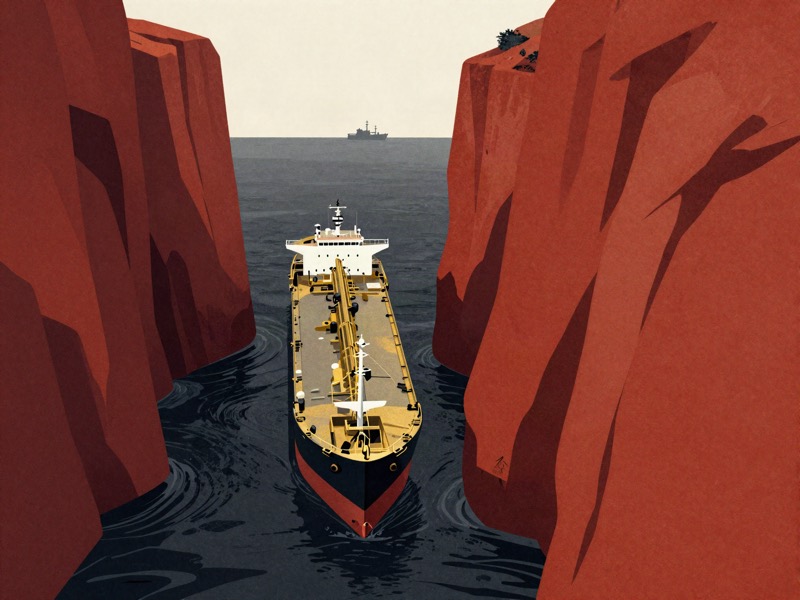
Seven months after Iran closed the Strait of Hormuz, the bill for the biggest energy-supply shock on record is still arriving
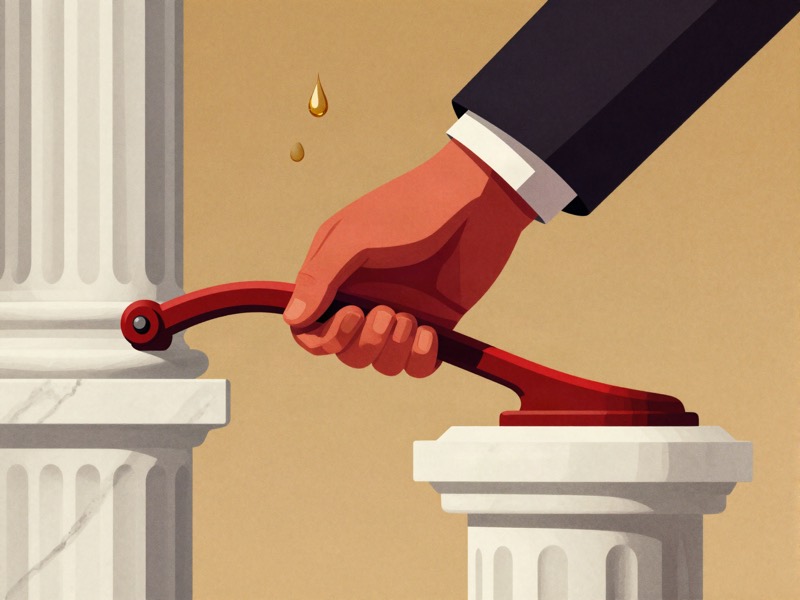
An oil shock has pushed America’s central bank into its first rate rise since 2023. Kevin Warsh may not be done