
Youth employment
The first job is still the hardest qualification
An October ILO brief puts hiring practices under scrutiny as young people struggle to get the experience employers demand.
Drought reaches beyond the farm through suppliers, workers and customers. Adaptation has to protect dependable service as well as create new supply.
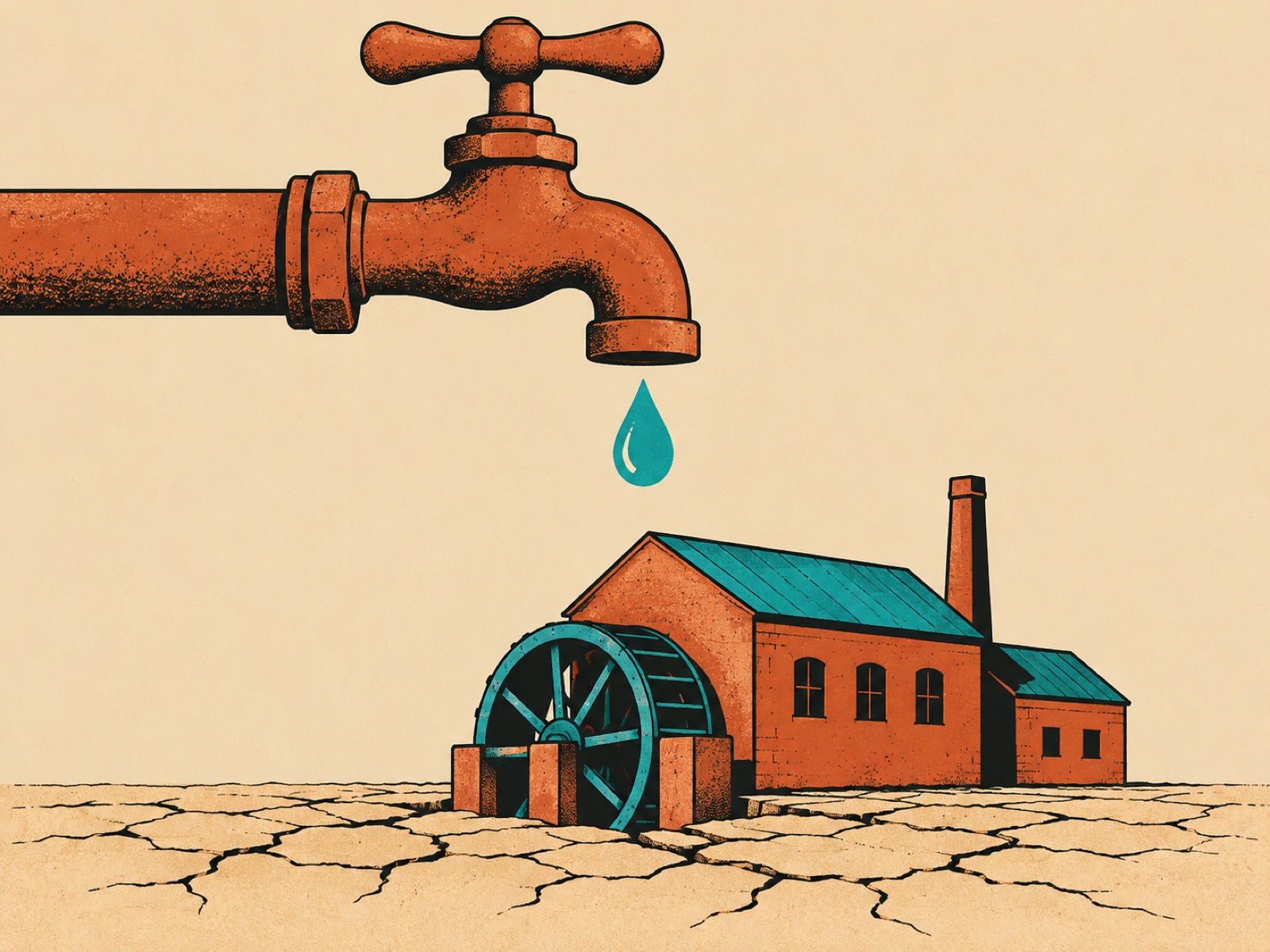
A dry field can mean less work for a processor, a transporter and a shopkeeper as well as a farmer. The employment cost of water shortages extends through the local economy. A World Bank report released in November 2025 estimated that droughts left between 600,000 and 900,000 people without work annually in Sub-Saharan Africa during 2005–2018. That historical estimate makes water availability a question of livelihoods as well as crop yields.
The report uses satellite observations alongside economic and land-use information to examine persistent freshwater losses. Its account includes climate pressures and choices over irrigation, land and resource management. A drought may be a weather event; the severity of the economic damage also depends on how an economy has organised its demand for water.
Consider the choices when a farm cannot irrigate. A processor may obtain produce from farther away, preserving activity at a higher transport cost. A local shop has less scope to replace the lost purchasing power of nearby customers. Workers' alternatives matter too: moving to another occupation is easier if that occupation is available and they have the skills to enter it.
This is why employment exposure differs from the number of people directly collecting or delivering water. The World Bank's earlier Water for Shared Prosperity assessment reported that water-intensive sectors accounted for 55% of employment in low-income countries, compared with less than 20% in high-income countries. Those shares describe structural exposure. The number of jobs at risk in a particular shortage depends on its severity and the capacity to adapt.
The figures indicate where adaptation is especially consequential. A household with few savings and no alternative occupation has less room to absorb lost work than a diversified business. The same physical shortfall can therefore produce very different economic outcomes.
Storage, treatment and reuse can expand the options. A separate World Bank report on municipal and industrial reuse argues that the business case is strongest when used water is available close to the place that needs it. It describes investment and regulatory conditions under which reuse could expand substantially by 2040. That scenario describes potential supply, rather than capacity already installed.
For a proposed plant, the relevant question is how much usable water can reach it at an affordable cost. A source elsewhere in the country offers little reassurance if the connection is prohibitively expensive. Quality requirements and delivery timing matter alongside volume. A smaller, dependable supply nearby can be more valuable than a larger one that cannot reliably reach the user.
Treatment facilities also need energy, maintenance and somebody able to pay for continuing operation. A financing plan should account for those costs before construction begins. Completing the plant is one milestone; keeping it running through the conditions for which it was built is the service customers need.
The drying report proposes managing demand, expanding supply and improving allocation. The difficult part is deciding how those objectives interact. A price that fails to reflect scarcity can encourage waste, but an abrupt increase can hurt households and firms with little capacity to change their behaviour.
Policy therefore needs to distinguish essential access from unrestricted use. Support can protect vulnerable households while water accounts, clear abstraction rules and appropriate incentives encourage adjustment elsewhere. The distributional choices should be explicit rather than hidden in unreliable service.
A further complication is that efficient equipment does not automatically guarantee a reduction in total use. If lower water requirements make an activity cheaper to expand, some of the saving can be absorbed by greater production. That is a reason to measure total withdrawals and consumption alongside equipment adoption, not an argument against improving technology.
The November 2025 report is a warning about how economies organise work around a finite input. Investment plans should specify the water an activity needs, the supply it can depend on and what will happen during a shortfall. For the people earning their living there, adaptation is credible when that plan can keep working through a dry year.
An October ILO brief puts hiring practices under scrutiny as young people struggle to get the experience employers demand.
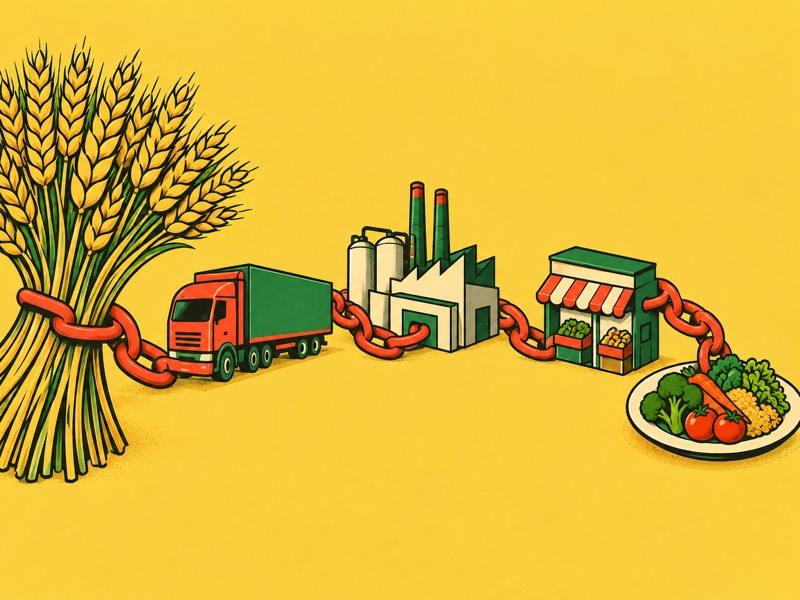
September's rise in international food prices is a warning signal. Household affordability depends on a longer chain of costs and incomes.
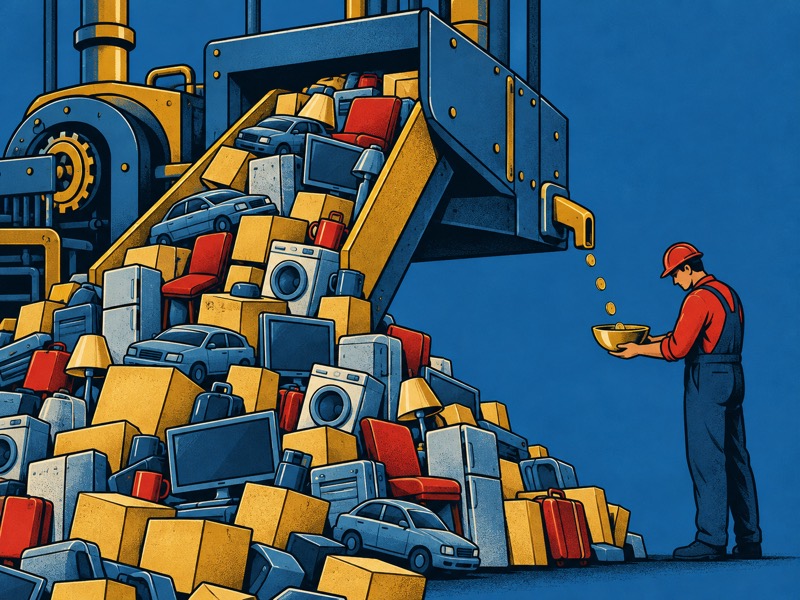
US nonfarm productivity rose in the year to Q2 2026 while real hourly compensation edged down. The household benefit needs to be measured separately.