Chip manufacturing
The factory has a say
Record profits leave TSMC with a problem that money alone cannot solve—turning new capacity into dependable production
Higher fares and a refinery soften Delta’s fuel shock, but the airline still needs to resist the temptation to grow
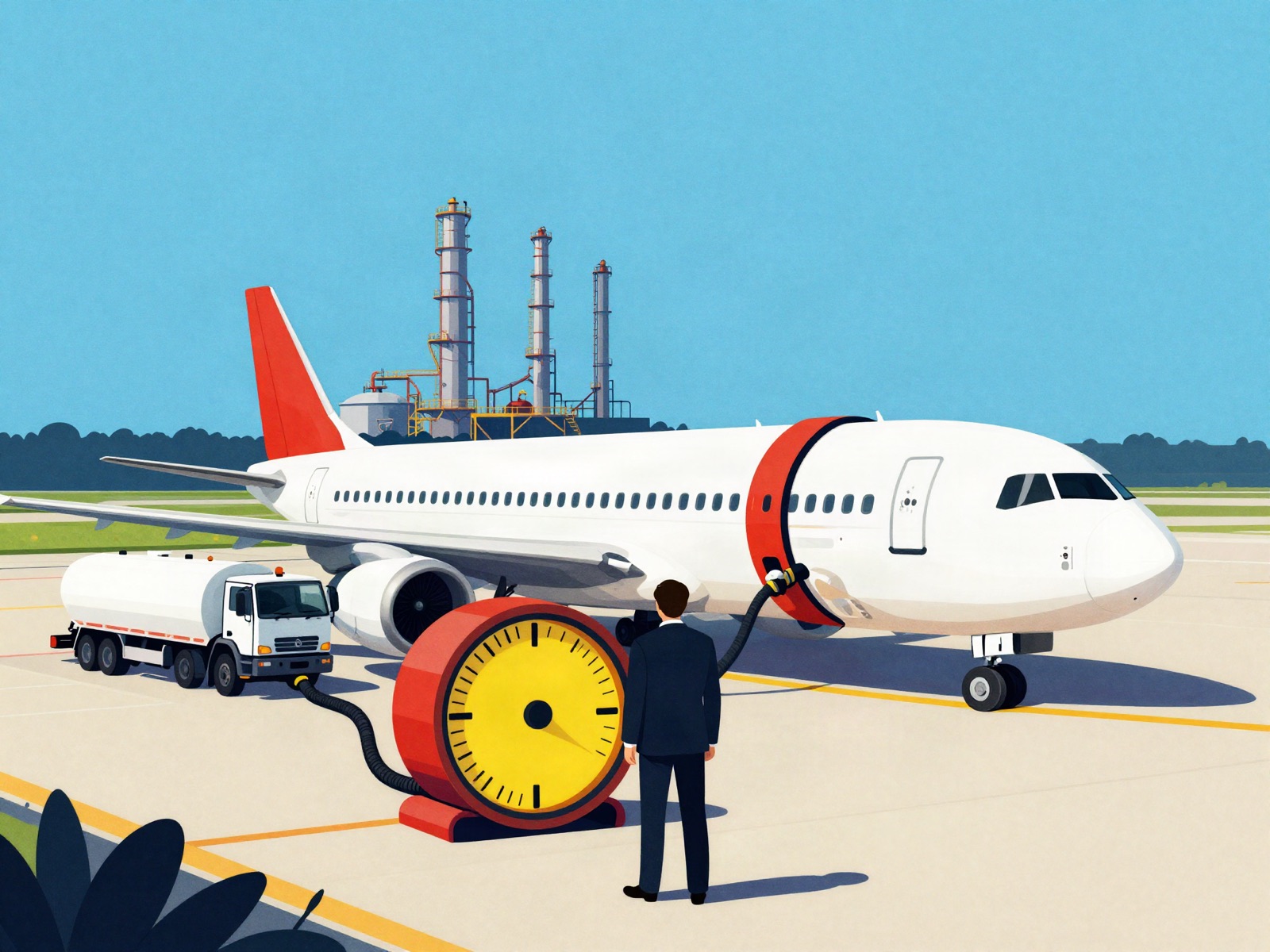
Delta Air Lines has several ways to withstand expensive fuel: charge more, sell a richer mix of travel and collect profits from its own refinery. Its October 9th results showed all three defences under strain. Demand remained strong, yet the airline cut its annual profit forecast. The operating question is how much flying still pays when customers are willing to travel but each departure costs more.
For the September quarter, Delta reported adjusted earnings of $1.72 a share. Its full-year forecast fell to $5.10–5.60, from the $6.50–7.50 range reaffirmed in July. These are adjusted measures, rather than earnings under generally accepted accounting principles. Stronger ticket revenue was helping to absorb the shock; it was not keeping the previous profit outlook intact.
The adjusted fuel bill reached $4.1bn, up 62% from a year earlier. Delta paid an average adjusted $3.61 a gallon. Its December-quarter plan assumed $4.25, based on the forward market on October 2nd. That dated assumption explains the forecast's starting point. It is neither a contracted ceiling on the airline's costs nor a prediction that every gallon will be bought at that price.
The Monroe refinery near Philadelphia gives Delta an unusual source of earnings. Reuters's March account explained that the airline still pays market prices for fuel transferred from the operation. Refinery profits remain within the group. The protection comes from owning a business that can benefit from expensive refined products, rather than receiving fuel at an artificially cheap internal price.
The relevant margin is between the cost of crude and the value of the products made from it. When refined-fuel supply tightens, that gap can widen even as airlines' costs rise. A refinery can then offset some of the pressure on the flying business. This is why crude prices alone are an inadequate guide to what Monroe contributes: the price of the finished fuel matters too.
The US Energy Information Administration describes refining as a sequence that separates and processes crude into several products. An airline owner does not receive a machine whose entire output exactly matches its aircraft's needs. Product mix, operating costs and interruptions still influence the result. Delta has acquired a different stream of earnings, along with the industrial responsibilities required to generate it.
The December fuel assumption already includes an expected refinery benefit. There is no additional saving to subtract from the $4.25 figure. The airline's own forecast therefore supplies a useful test of the hedge: even after allowing for the refinery, fuel remained expensive enough to require a lower earnings outlook. Monroe moderates one exposure; it cannot set the economics of the whole network.
Delta's commercial response is visible in the composition of its flying. Its release described September revenue growth on flat capacity, stronger main-cabin unit revenue as main-cabin seats fell, and growth in premium seating. For December, management again planned to reduce main-cabin seats while expanding total seats only modestly. Restraint here means reallocating the product, not stopping every part of the airline from growing.
That distinction makes the premium strategy more concrete. A better mix can raise the revenue earned from a constrained schedule without requiring every passenger to accept the same fare increase. It also leaves an airline exposed to the willingness of customers to pay for that mix. Premium seats still occupy aircraft, consume fuel and need buyers; their label does not make their contribution automatic.
Delta also reported growth in loyalty revenue and remuneration from American Express. Such income gives the group another source of support beyond the fare on the next departure. It does not make the decision to operate a particular flight irrelevant. A profitable relationship with a card partner and a profitable addition to the timetable are different commercial achievements.
Reuters's results report highlighted management's case for further industry capacity restraint. The logic is straightforward: an extra flight must cover the costs it adds without undermining fares elsewhere. A seat cannot be stored for sale after departure. When fuel becomes dearer, filling more aircraft at weaker prices can increase revenue while making the underlying problem worse.
Keeping capacity tight also makes some costs harder to absorb. Delta attributed higher non-fuel unit costs partly to crew and revenue-related expenses and to capacity growth below its original plan. Summer storms added pressure. This is the other side of schedule discipline: the airline may protect fares while spreading its operating commitments over less flying than it had expected.
Simply adding flights to improve a unit-cost measure would evade the commercial question. The relevant comparison is the profit from the additional operation, including its fuel and the effect on revenue. Equally, cutting too far could surrender worthwhile business. Delta must judge routes, cabins and schedules separately; a blanket preference for either growth or contraction would be a poor substitute.
Its December plan therefore depends on several defences working together: a carefully chosen schedule, customers paying for the resulting product mix, and refinery earnings cushioning part of the fuel bill. The important test is whether those choices preserve operating profit, not whether total sales continue to rise. Owning a refinery gives Delta more room to respond. Deciding where to fly remains the airline's harder job.
Record profits leave TSMC with a problem that money alone cannot solve—turning new capacity into dependable production

LVMH’s fashion sales have weakened again while Brunello Cucinelli advances, making a sector-wide recovery too simple a story
America’s tech giants are spending like railway barons. Investors are starting to ask what they will get back