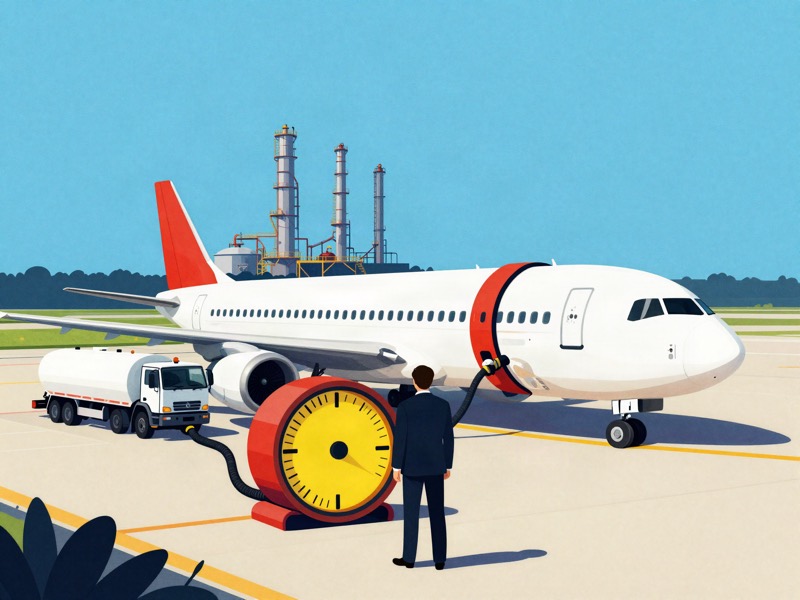
Airline economics
A partial hedge
Higher fares and a refinery soften Delta’s fuel shock, but the airline still needs to resist the temptation to grow
Record profits leave TSMC with a problem that money alone cannot solve—turning new capacity into dependable production

Artificial intelligence is often described as a contest between designers of clever chips and buyers with enormous budgets. TSMC’s results on October 15th put the factory back in the picture. Orders and money are indispensable. Neither can substitute for a manufacturing process that produces the right components, at the right quality, in the right combination.
The Taiwanese chipmaker reported September-quarter net profit of approximately NT$763.1bn, up 69% from a year earlier. It maintained its capital-spending plan of US$60bn–64bn for 2026. The figures, confirmed in company documents and independent reporting, describe a business benefiting enormously from demand. They do not establish that every bottleneck can be bought away on demand.
Much of the public debate about AI concerns whether customers will eventually earn enough from the technology to justify their spending. TSMC faces a related but distinct task: deciding which industrial capabilities to expand before that answer is settled. Its October presentation combined confidence in AI demand with caution about more price-sensitive consumer markets. The boom is not evenly distributed across the machines that use chips.
The phrase “chip capacity” hides several different jobs. Making the logic that performs calculations is one. Connecting it to memory and other components is another. TSMC’s CoWoS packaging technology combines computing chips and high-bandwidth memory in a package designed to move information rapidly between them. Packaging here is part of the working product, not merely a box around it.
That distinction changes how expansion should be understood. More output at one stage does not automatically create more finished systems if another stage cannot keep up. A factory can make additional components while its customers still wait for the combination they need. Adding capacity in the wrong place can increase inventories instead of useful deliveries.
This is also why the number attached to a manufacturing generation is not a complete guide to commercial success. Customers need performance, power efficiency and a reliable path from design to volume production. A component that performs beautifully in isolation still has to operate inside a larger system. Production schedules have to fit together as carefully as the components do.
TSMC’s technical description of CoWoS shows how closely logic and memory are integrated. The business implication is an inference from that design: a supplier capable of coordinating these steps offers more than extra floor space. It offers a route through a sequence of interdependent production problems. That is harder to reproduce than an announcement of a new building.
Geography adds another complication. The Associated Press reported after the results that TSMC was examining a possible investment in Texas. Management described the discussions as preliminary. Its earnings call made a separate point clear: any manufacturing operation it undertook would need to be run by TSMC.
Those statements should not be turned into a completed deal or a promise about when chips will emerge. Exploring a location, agreeing an investment and producing reliably are different milestones. The gap between them is where much of the difficult industrial work takes place.
Control matters because semiconductor manufacturing involves repeated, precise processes. A new site must develop the equipment settings, maintenance routines and staff experience that make those processes dependable. A customer seeking additional domestic supply needs consistent output, not merely a factory bearing a familiar name.
The economic test is equally demanding. Spreading production geographically can offer customers resilience and proximity. It can also cost more. TSMC’s October discussion acknowledged the margin pressure associated with expanding overseas. That trade-off should be evaluated openly: duplicated capabilities can be useful insurance even when they are not the cheapest way to manufacture.
There is no contradiction between strong demand and such pressure. A company can have customers waiting outside while spending heavily inside to serve them. The cost of preparing future production can arrive before the corresponding sales. Near-term profitability and long-term industrial readiness therefore need separate examination.
The harder judgement concerns timing. Build too slowly and customers may lose sales or seek alternatives. Build too quickly and a change in their plans can leave expensive equipment underused. Large budgets make both outcomes consequential.
A useful reading of TSMC’s results asks three questions. Which capabilities are actually scarce? When can additional output become commercially usable? And how much of the demand behind the expansion reflects operating needs rather than customers reserving options? The published results cannot answer each question completely, but the questions are more revealing than treating capital expenditure as a scoreboard.
Management’s distinction between buoyant AI demand and more vulnerable consumer markets also matters. An industry can experience shortages in specialised products and weak demand elsewhere at the same time. The existence of one does not disprove the other. Nor does every unused factory represent capacity that can immediately satisfy a different customer.
For buyers, the consequence is to examine delivery commitments alongside headline specifications. For TSMC, it is to preserve manufacturing discipline while responding to pressure to expand. For readers of the AI boom, it is a reminder that investment becomes productive through a chain of physical operations, each with its own limits.
The October results show a company earning exceptional profits from its place in that chain. The next test is not whether it can announce more spending. It is whether new locations, processes and packaging capabilities can become dependable output without diluting the expertise that made customers come in the first place. Even in the age of artificial intelligence, the factory retains a vote.
Higher fares and a refinery soften Delta’s fuel shock, but the airline still needs to resist the temptation to grow

LVMH’s fashion sales have weakened again while Brunello Cucinelli advances, making a sector-wide recovery too simple a story
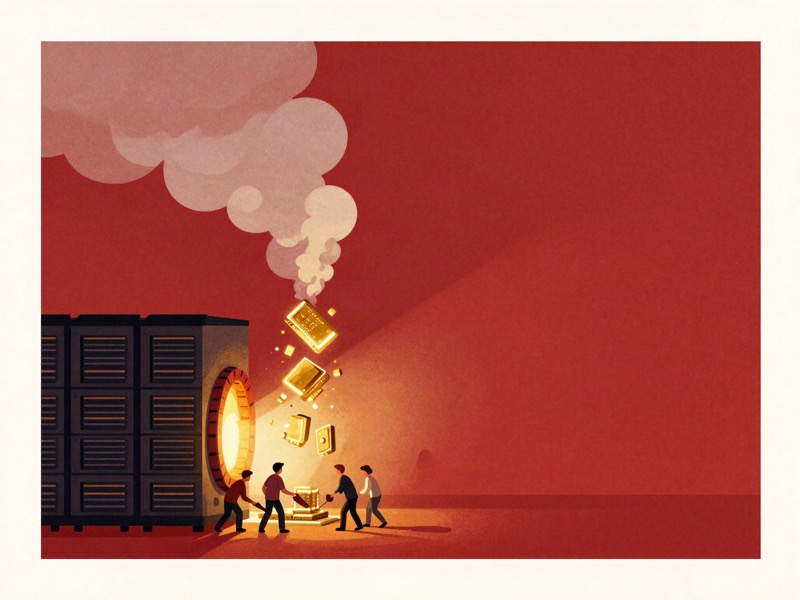
America’s tech giants are spending like railway barons. Investors are starting to ask what they will get back