
India · Food and energy security
A bitter blend
India is protecting sugar supplies by changing what can go into its fuel, exposing the agricultural limits of energy independence
Blocking a Chinese takeover of Zippel puts the inland connections of Hamburg's port at the centre of an argument over economic security
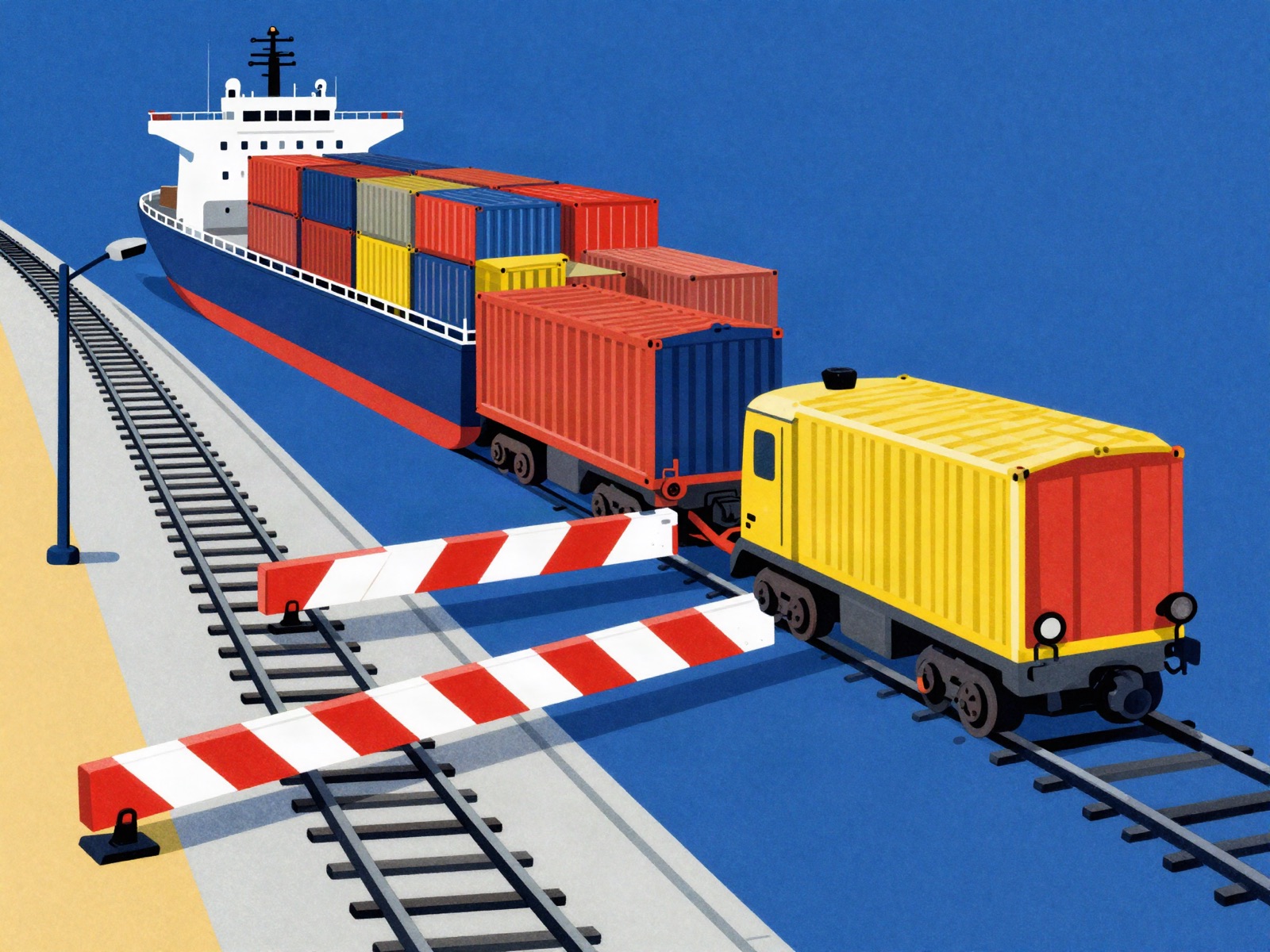
The container’s journey does not end when the ship docks. That unremarkable fact now sits behind a consequential German investment decision. On October 7th the federal government blocked Chinese state-owned shipping group COSCO’s planned purchase of 80% of Hamburg logistics company Konrad Zippel. Germany’s competition authority had already cleared the transaction in February. Passing that examination did not settle who should control the next stage of the journey.
At the government’s press conference, the economy ministry said the acquisition would deepen existing dependencies and threaten the resilience of German and European supply chains. It declined to disclose detailed security considerations. The decision therefore rests publicly on a judgment about future exposure, rather than a published finding that Zippel’s operations have already been misused.
For Hamburg, the argument reaches beyond the familiar photographs of giant ships and terminal cranes. Zippel moves containers between seaports and inland destinations. Its work connects an international shipping market to the roads, rail services and delivery arrangements on which German customers depend.
The group’s own description gives those connections a geography. Its Hamburg headquarters organises container movements by rail and lorry. Z-Liner Rail’s trucks handle local connections around the BEHALA terminal in Berlin and KTSK in Schkopau. Another group company, zigsXpress, operates a railway network from northern German seaports towards eastern and southern Germany.
These are different functions from carrying a container across an ocean. For an importer, however, they belong to the same commercial promise: getting goods to their destination. Combining them under a shipping group could make coordination easier. It could also put more of the route under a common owner. The acquisition debate concerns that second possibility as well as the first.
The ownership proposal was substantial. COSCO sought a controlling majority, rather than a small financial interest. Zippel managing director Axel Plaß wanted to remain in management and retain a minority stake, according to NDR’s report. Following the veto, he defended the commercial decision and said daily business would continue unchanged for customers and employees. The blocked sale was not an announcement that the company would stop carrying freight.
The earlier competition clearance explains why this case is more informative than a simple story of Berlin closing the door to China. In a February statement reproduced by M&A publication mandaco, Bundeskartellamt president Andreas Mundt said COSCO and Zippel worked at different levels of the transport chain. One principally carried containers by sea; the other organised their onward movement inland. They were not direct competitors.
The authority also considered access across those levels. Its investigation did not lead it to expect an appreciable deterioration in rival shipping companies’ access to forwarding services, or in other forwarders’ access to shipping customers. That was a commercial assessment of the proposed combination. The statement expressly left foreign-trade and security questions outside the competition review.
The cabinet’s October decision addressed the issue left open. A business can face competition today while its ownership still raises questions about access during a crisis. Conversely, treating every link in a supply chain as strategically indispensable would make ordinary investment unnecessarily difficult. Zippel’s case turns on the government’s judgment about this particular network and buyer.
The distinction also matters to the seller. A favourable merger decision allows a deal to pass one legal hurdle; it does not promise that an investment review will reach the same answer. Here, the gap between February’s clearance and October’s veto left the commercial proposal intact long enough to expose the disagreement between the two assessments.
COSCO already has a foothold at Hamburg’s Container Terminal Tollerort. HHLA announced an agreement in June 2023 for COSCO Shipping Ports to take 24.99% of the terminal company. That stake, also reported in October’s independent coverage, provides a useful comparison with the proposed Zippel majority purchase.
HHLA describes the Tollerort arrangement as leaving major decisions under its control. Its explanation says COSCO has no exclusive right to use the terminal and that responsibility for IT and sales data remains with HHLA. The port land remains publicly owned. Those statements describe the structure defended by the terminal operator; they are not an independent verdict on every risk.
The contrast is nevertheless concrete. A minority interest in a terminal company and control of an inland logistics business offer different forms of influence. The Zippel veto does not reverse the Tollerort transaction. It shows why the label “Chinese investment in Hamburg” is too broad to explain either decision without looking at the rights and operations involved.
Information is part of that examination. In an NDR interview published before the veto, Wolfgang Müller of the German Institute for Defence and Strategic Studies described how logistics ownership could improve access to knowledge of local markets and sensitive movements. His discussion concerned potential exposure. It did not identify a disclosed transfer of Zippel customer data.
There is a commercial cost to drawing the line at ownership. Plaß’s defence of the deal shows that a transaction rejected on security grounds can still be attractive to the people running the target. Hamburg’s economic authority had also indicated it would have accepted the sale, NDR reported. The federal decision put a wider security assessment ahead of those local and commercial preferences.
The government has not announced a blanket prohibition on Chinese logistics investment. Its spokesman described continuing assessments case by case. For other buyers, Zippel offers a more specific lesson: acquiring a company that connects a port to its hinterland can attract scrutiny extending beyond the company’s immediate market share. Germany has kept the next stage of this container journey outside COSCO’s control.
India is protecting sugar supplies by changing what can go into its fuel, exposing the agricultural limits of energy independence
A new reservation programme gives more ships a way to plan ahead. It cannot promise more rain

New European listings focus on the services that connect restricted trade, but measuring their effect will be harder than naming the firms