
Youth employment
The first job is still the hardest qualification
An October ILO brief puts hiring practices under scrutiny as young people struggle to get the experience employers demand.
Money sent home supports demand and family resilience, but economies dependent on it inherit risks from labour markets abroad.

A household can rely on a wage earned thousands of miles away. When money arrives, the grocer, landlord or school at home may depend on it too. In a July 1st discussion of remittances, World Bank specialists put global flows in 2024 at an estimated $856 billion, including $653 billion to low- and middle-income countries. Those transfers connect the spending of receiving families to jobs in another economy.
The July analysis describes the scale of flows in 2024; it supplies no count of money received so far in 2026. For a receiving economy, the useful question is how dependable that support will be when domestic incomes falter, and what happens if the sender's earnings falter instead.
The International Fund for Agricultural Development describes remittances as support for rural households' education, healthcare and enterprise activity. It also identifies the opportunity to connect receiving families with savings and productive investment. Savings and enterprise are possible uses alongside the immediate demands on a family budget.
Consumption itself has economic value. A family that can buy food or keep a child in school after a poor harvest may avoid a setback that lasts well beyond the original shock. Judging remittances solely by the share spent on a business would miss those protective uses.
At the same time, a transfer is not domestic production. It raises the resources available to the recipient, while the effect on local output depends on where and how the money is spent. Purchases from local businesses can support activity. Spending on imported goods has a different immediate effect on domestic producers. Neither use makes the transfer worthless to the household.
A stronger inflow can therefore improve household purchasing power before local productive capacity changes. Evaluating the two separately avoids penalising a family for using support to meet immediate needs. It also avoids crediting a transfer with output that local businesses have yet to produce.
Remittances depend on the circumstances of senders as well as recipients. In its June 2024 assessment, the World Bank identified weak growth in migrant-hosting economies and movements in oil prices and exchange rates as risks to future flows. That is a historical assessment of risks to flows, rather than evidence of a shock this October.
A household protected from a local downturn by income earned elsewhere remains exposed to conditions where its relative works. The protection is stronger when the two economies suffer setbacks at different times. For a receiving country, following employment and earnings in migrants' host economies is therefore part of assessing domestic demand.
Exchange rates add another layer. The same foreign-currency transfer can produce more local currency after depreciation, but that apparent gain may be offset if imported necessities become dearer. A larger amount received at the counter does not, by itself, establish that the household can buy more.
Transaction costs reduce what is available at either end. The World Bank's Remittance Prices Worldwide report put the global average cost of sending $200 at 6.36% in the third quarter of 2025, including transfer fees and exchange-rate margins. This is a simple surveyed average, rather than one weighted by the value of transfers, and is not a quote for a particular family or corridor.
For families sending money repeatedly, a cost reduction can leave more available to spend or save. Turning that saving into a successful enterprise requires something further: reliable services, customers and a workable business environment in the recipient's town. A cheaper transfer improves the resources available without deciding how those resources will be used.
Governments should also resist treating family support as a substitute for public responsibility. Remittances are directed by relationships; people without relatives earning abroad may receive nothing. A private network cannot be assumed to provide universal protection.
The strongest case for remittances starts with the choices they preserve: keeping a child in school, meeting a bill or taking a manageable business risk. A sound assessment should also ask who has no access to that support, and how a receiving household would cope if the next transfer were smaller. The safety net reaches across a border; so does its source of risk.
An October ILO brief puts hiring practices under scrutiny as young people struggle to get the experience employers demand.
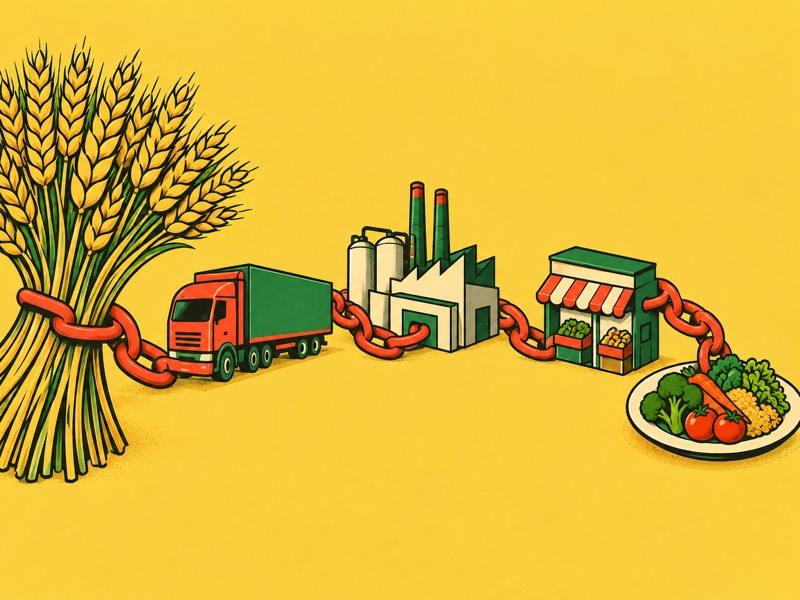
September's rise in international food prices is a warning signal. Household affordability depends on a longer chain of costs and incomes.
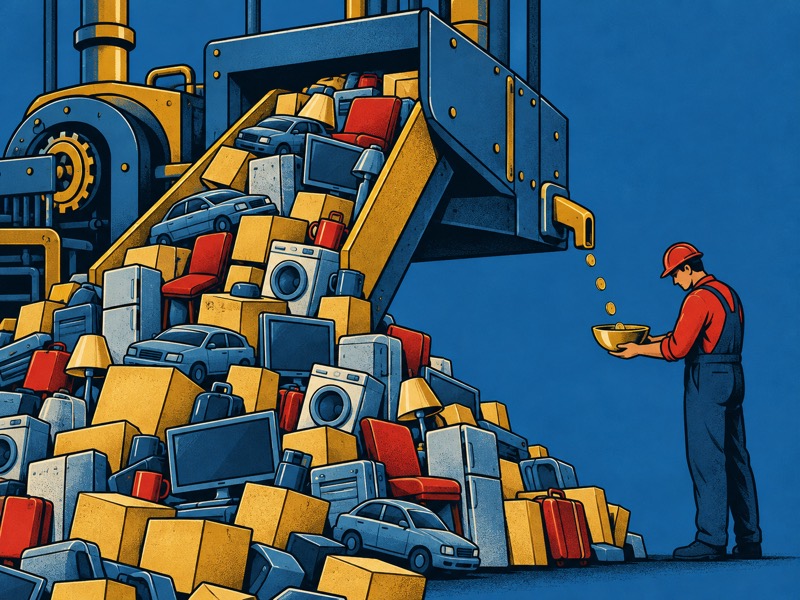
US nonfarm productivity rose in the year to Q2 2026 while real hourly compensation edged down. The household benefit needs to be measured separately.