
Ocean governance · High-seas treaty
A share of the ocean’s discoveries
The high-seas treaty took effect for Germany on October 22nd and for Australia and Canada on October 23rd. Its bargain extends to samples, data and the capacity to use them
The January 2027 deadline for qualifying Russian LNG contracts is approaching. Buyers’ bargaining power will depend on what they have arranged to replace them
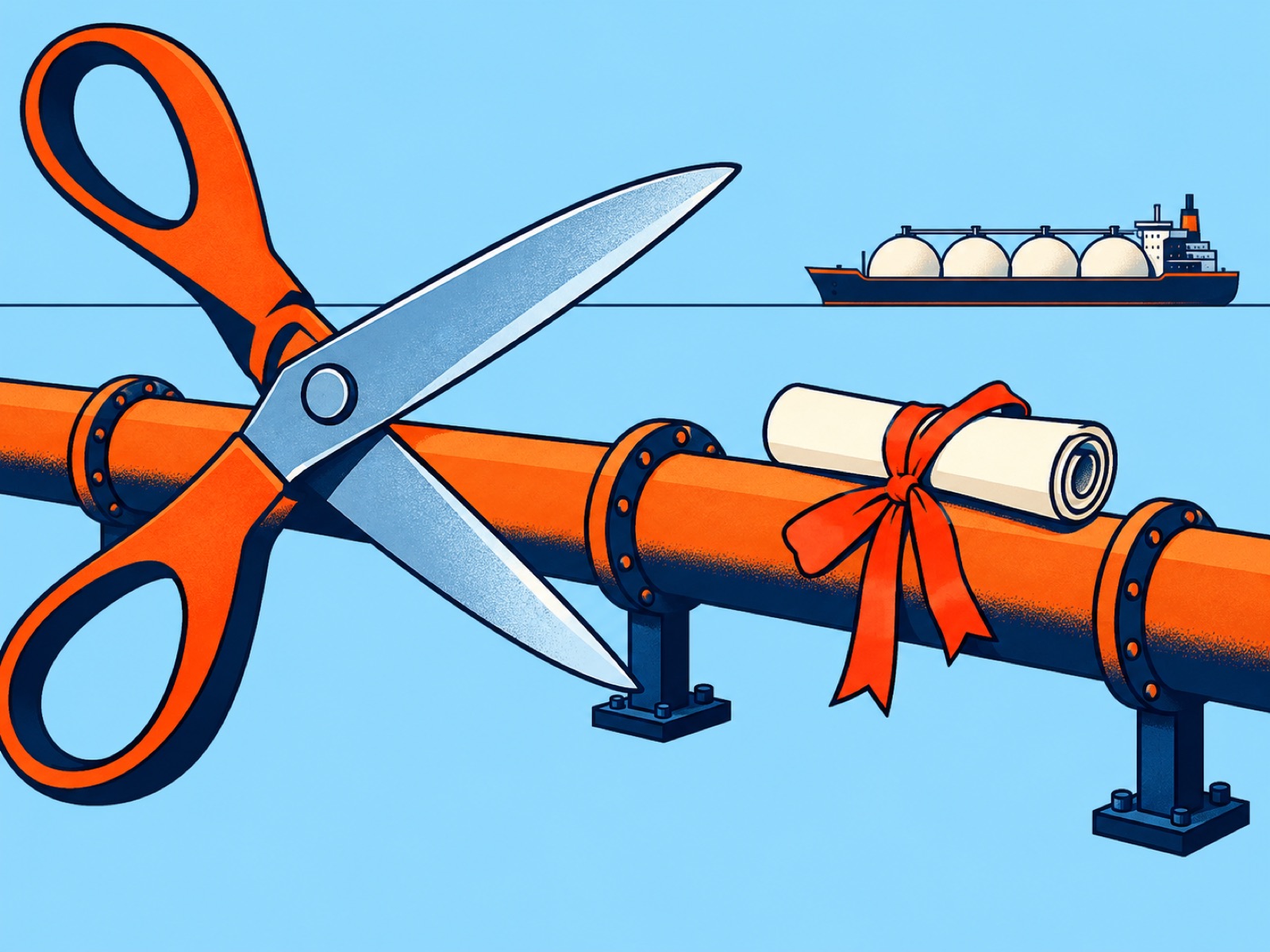
A European buyer replacing Russian liquefied natural gas has a deadline that prospective suppliers can see too. The transition for qualifying long-term LNG contracts ends on January 1st 2027. Long-term pipeline contracts have a later deadline, normally September 30th 2027, under the Council’s phase-out timetable. Europe has agreed to leave Russian gas behind. The terms on which individual customers make that exit remain a commercial negotiation.
The law was formally adopted on January 26th 2026. It covers pipeline gas and LNG, alongside monitoring and diversification requirements. At adoption, the Council estimated that Russian gas still supplied 13% of EU gas imports in 2025. The adoption announcement put the annual value above €15bn.
The 13% figure describes the dependence recorded in 2025, but says little about the difficulty of removing what remains. A customer with replacement gas secured is in a different position from one still seeking a delivery route or negotiating a pricing formula. The remaining contracts may include precisely the buyers for whom alternatives are hardest to assemble. A falling aggregate share can conceal a stubborn final stretch.
The general prohibition began on March 18th 2026. For most qualifying existing short-term arrangements, the transition ended on April 25th for LNG and June 17th for pipeline gas. The ordinary transition relief concerns contracts concluded before June 17th 2025, subject to restrictions on later amendments. Article 4 also preserves a narrow exception for short-term pipeline supplies needed to fulfil qualifying long-term pipeline contracts for landlocked countries where delivery at the original border point is no longer possible. Such supplies can follow the later pipeline timetable. A buyer’s route out therefore depends on the history and terms of its contract, as well as on whether the gas arrives by ship or pipe.
The pipeline timetable includes a narrowly defined storage contingency. Where the conditions in the law are met and the Commission confirms a risk of missing the relevant storage target, the deadline for qualifying long-term pipeline contracts can move to November 1st 2027 in the member state concerned. The legislative text, Article 4, makes this conditional, rather than a general option for every buyer to choose the later date.
A fixed deadline concentrates bargaining power in an awkward way. It gives buyers a reason to arrange alternatives early, but also tells sellers when a customer must secure replacement supply. Buyers with several workable offers can use competing proposals to improve the terms. Those still trying to assemble a route as the deadline approaches have less room to walk away. The legislation cannot guarantee an attractive replacement price.
There is a second timing problem. Replacement gas can be available for one season without being available on attractive terms for many years. A buyer seeking certainty may accept a longer commitment; one preserving flexibility may retain more exposure to future market prices. Neither choice can be assessed from the nationality of the seller alone.
The regulation also requires authorities to establish where gas was produced. Its definition follows the place of extraction through subsequent liquefaction or regasification, with specific treatment for processing in Russia. That makes the production history relevant even when the immediate counterparty or delivery point is elsewhere. The importer therefore needs a record of production as well as purchase.
The cargo’s documentation thus becomes part of the supply decision. A lower price is of little use if an importer cannot establish origin well enough to clear the applicable authorisation process. Changing the immediate seller does not, by itself, answer the regulator’s question about where the gas came from. Importers need that evidence before they can rely on the purchase.
Governments were required to submit national diversification plans by March 1st 2026, describing remaining contracts and obstacles to replacement. The plans are meant to connect the common timetable with each country’s particular supply constraints. The Council’s January announcement also described a short emergency suspension mechanism where supply security is seriously threatened.
Emergency flexibility protects the energy system against an exceptional disruption. It also complicates the signal sent to buyers. If firms expect relief whenever replacement becomes expensive or inconvenient, a deadline loses force. The narrow conditions matter because an emergency safeguard and a commercial fallback serve different purposes.
January’s LNG deadline brings that distinction into the contracting office. Buyers need gas that can reach them, records that establish its origin and terms they can live with after the Russian agreement ends. Europe’s political leverage depends partly on these private arrangements. An exit negotiated early leaves a buyer with choices; one negotiated against the clock can exchange dependence on an old supplier for expensive commitments to a new one.
The high-seas treaty took effect for Germany on October 22nd and for Australia and Canada on October 23rd. Its bargain extends to samples, data and the capacity to use them

Licence fees, inspections and scientific advice give substance to an Arctic partnership expanding into energy, connectivity and raw materials
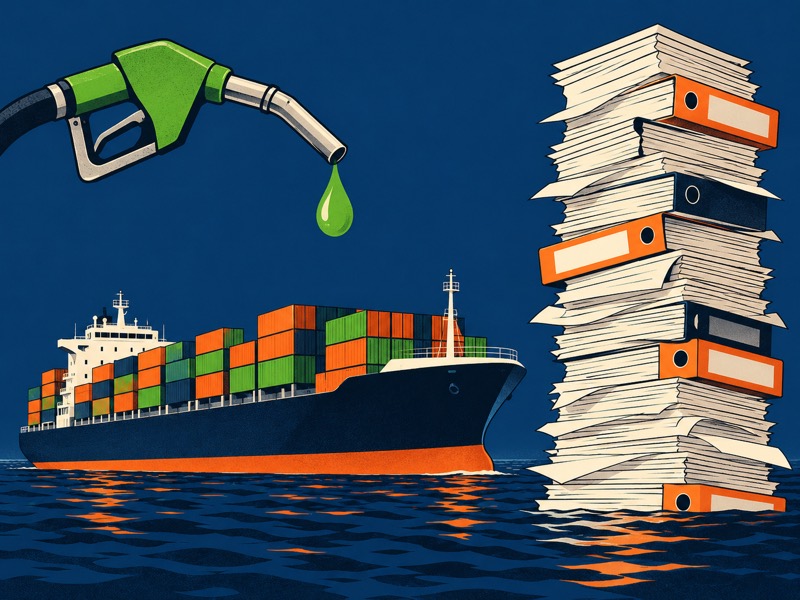
Deferred work on emissions accounting leaves shipowners and fuel producers waiting for rules that could determine what a cleaner fuel is worth